A commercial electrical system upgrade becomes important when a building starts using more power than the original system was designed to handle. Growing facilities often add new equipment, technology, lighting, HVAC systems, workstations, machinery, security systems, chargers, tenant improvements, or production areas. As the building changes, the electrical system may need to be reviewed, expanded, repaired, or upgraded to support safe and reliable operation.
For commercial facilities, electrical upgrades are not just about adding more outlets or replacing a panel. They involve load planning, panel capacity, circuits, wiring, lighting, equipment power, code requirements, safety, future expansion, and coordination with other building systems. Airco Mechanical provides commercial electrical services for facilities that need electrical repairs, upgrades, installation, and system support.
A growing facility should not wait until electrical problems become routine. Repeated breaker trips, overloaded panels, flickering lights, hot outlets, limited circuit capacity, aging equipment, or new business demands can all point to the need for an electrical system review.
What Is a Commercial Electrical System Upgrade?
A commercial electrical system upgrade is the process of improving or expanding a building’s electrical system so it can support current and future power demands. The upgrade may involve one area of the building or the entire facility.
Commercial electrical upgrades may include:
- Electrical panel upgrades
- New circuit installation
- Dedicated equipment circuits
- Service capacity review
- Lighting upgrades
- Emergency lighting improvements
- Outlet additions
- Wiring updates
- Breaker replacement
- Electrical room improvements
- Equipment power connections
- Tenant improvement wiring
- Load calculation review
- Surge protection
- Control wiring
- Code-related corrections
The right upgrade depends on the facility type, current system condition, business operations, equipment needs, and future growth plans.
Why Growing Facilities Need Electrical Upgrades
As a business grows, its electrical demand usually increases. A building that worked well years ago may no longer support the way the facility operates today.
A growing facility may need more power for:
- Additional employees
- New office equipment
- Computers and servers
- Manufacturing equipment
- HVAC upgrades
- Commercial kitchen equipment
- Lighting expansion
- Security systems
- Access control
- Charging stations
- Warehouse equipment
- Medical or specialty equipment
- Tenant buildouts
- New machinery
- Automation systems
If electrical capacity is not reviewed, the building may experience reliability issues, safety concerns, and operational delays.
Signs Your Commercial Electrical System Needs an Upgrade
A facility may show warning signs before a major electrical issue happens. These signs should not be ignored.
Common signs include:
- Breakers trip frequently
- Lights flicker or dim
- Outlets feel warm
- Electrical panels are outdated
- Extension cords are used too often
- New equipment cannot be supported
- Burning smells near electrical areas
- Buzzing sounds from panels or fixtures
- Limited outlet access
- Power is uneven across work areas
- Equipment shuts down unexpectedly
- Electrical room is overcrowded
- Panel labels are missing or inaccurate
- Old wiring is still in use
- Facility expansion is planned
If these issues appear, the building should be inspected by a qualified commercial electrician.
Main Parts of a Commercial Electrical System
A commercial electrical system includes several connected parts. An upgrade may involve one or more of these areas.
| System Part | Purpose | Upgrade Concern |
|---|---|---|
| Electrical service | Brings power into the building | Capacity may not match current demand |
| Main panel | Distributes power to major systems | May need more capacity or modernization |
| Subpanels | Serve specific areas or equipment | May need expansion for new loads |
| Breakers | Protect circuits from overload | May trip often or be outdated |
| Branch circuits | Power outlets, lighting, and equipment | May need dedicated circuits |
| Wiring | Carries electricity through the building | May be old, undersized, or damaged |
| Lighting systems | Provide interior and exterior lighting | May need efficiency or safety upgrades |
| Emergency lighting | Supports safety during outages | Must be maintained and tested |
| Equipment connections | Power commercial equipment | Must match load requirements |
| Electrical room | Houses major electrical components | Needs access, labeling, and clearance |
Understanding these parts helps facility managers plan upgrades more clearly.
Electrical Capacity and Load Planning
Electrical load planning is one of the most important parts of a commercial electrical system upgrade. Before adding equipment or circuits, the building’s current and future power demand should be reviewed.
Load planning may consider:
- Current electrical usage
- Existing panel capacity
- Equipment power requirements
- HVAC electrical demand
- Lighting load
- Number of occupants
- Office equipment
- Production equipment
- Kitchen equipment
- Future tenant improvements
- Expansion plans
- Peak operating times
- Backup power needs
A proper load review helps determine whether the system can handle new demand or needs an upgrade.
Panel Upgrade for Commercial Facilities
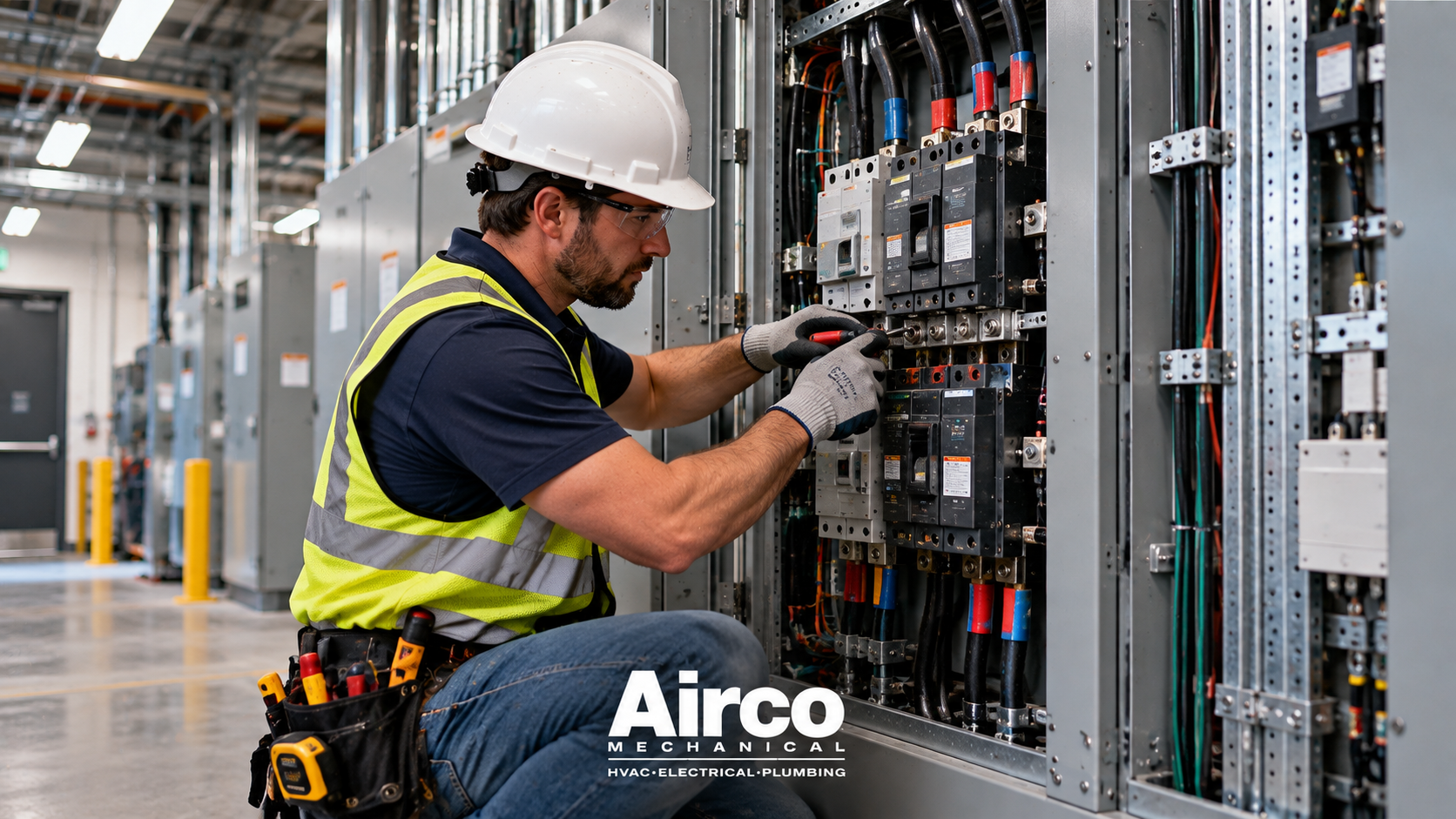
An electrical panel upgrade may be needed when the existing panel cannot safely or reliably support the facility’s current needs.
Panel upgrades may be recommended when:
- Breakers trip often
- Panel space is full
- New equipment is being added
- Circuits are overloaded
- Panel is outdated
- Building use has changed
- Tenant improvement work is planned
- Electrical capacity is limited
- Expansion is expected
A panel upgrade can help organize circuits, improve capacity, support equipment, and make future electrical work easier.
Dedicated Circuits for Commercial Equipment
Many commercial equipment types need dedicated circuits. A dedicated circuit serves one major appliance, machine, or system instead of sharing power with other loads.
Dedicated circuits may be needed for:
- Commercial kitchen equipment
- HVAC equipment
- Refrigeration units
- IT equipment
- Printers and office equipment
- Medical equipment
- Manufacturing machines
- Water heaters
- Pumps
- Security systems
- Charging stations
- Specialty tools
- Compressors
- Warehouse equipment
Adding dedicated circuits can reduce overload risk and improve equipment reliability.
Electrical Upgrades for Office Buildings
Office buildings often need electrical upgrades as teams grow, technology changes, and tenant layouts shift.
Common office upgrade needs include:
- More outlets
- Conference room power
- Workstation circuits
- Lighting improvements
- IT closet power
- Server equipment support
- Breakroom equipment circuits
- Emergency lighting maintenance
- Access control wiring
- Security system power
- Panel labeling
- Tenant buildout wiring
Office upgrades should support both daily operations and future layout changes.
Electrical Upgrades for Retail Spaces
Retail buildings need reliable power for lighting, point-of-sale systems, signage, displays, HVAC, security systems, and customer-facing equipment.
Retail electrical upgrades may include:
- Display lighting
- Exterior signage power
- Checkout counter outlets
- Security system wiring
- Camera system power
- Stockroom lighting
- Emergency lighting
- Additional circuits for equipment
- Panel improvements
- Energy-efficient lighting upgrades
Retail spaces often change layouts, so electrical planning should allow flexibility.
Electrical Upgrades for Warehouses and Industrial Facilities
Warehouses and industrial facilities may have larger electrical loads because of equipment, lighting, dock areas, ventilation, machinery, and production systems.
Upgrade needs may include:
- High-bay lighting
- Equipment circuits
- Panel upgrades
- Dock equipment power
- Ventilation equipment power
- Charging areas
- Machinery connections
- Emergency lighting
- Exterior security lighting
- Electrical room organization
- Power distribution improvements
Industrial and warehouse upgrades should be planned around operations to reduce downtime.
Electrical Upgrades for Restaurants and Food Service
Restaurants and commercial kitchens place heavy demand on electrical systems. Equipment loads, refrigeration, ventilation, lighting, and point-of-sale systems all need reliable power.
Common upgrade needs include:
- Commercial kitchen equipment circuits
- Refrigeration power
- Hood and exhaust system power
- Make-up air unit power
- Dishwasher circuits
- Beverage equipment circuits
- Lighting upgrades
- Emergency lighting
- Panel capacity review
- Outlet placement
- Equipment replacement support
Restaurant electrical upgrades should be coordinated with plumbing, HVAC, and kitchen equipment requirements.
Electrical Upgrades and HVAC Systems
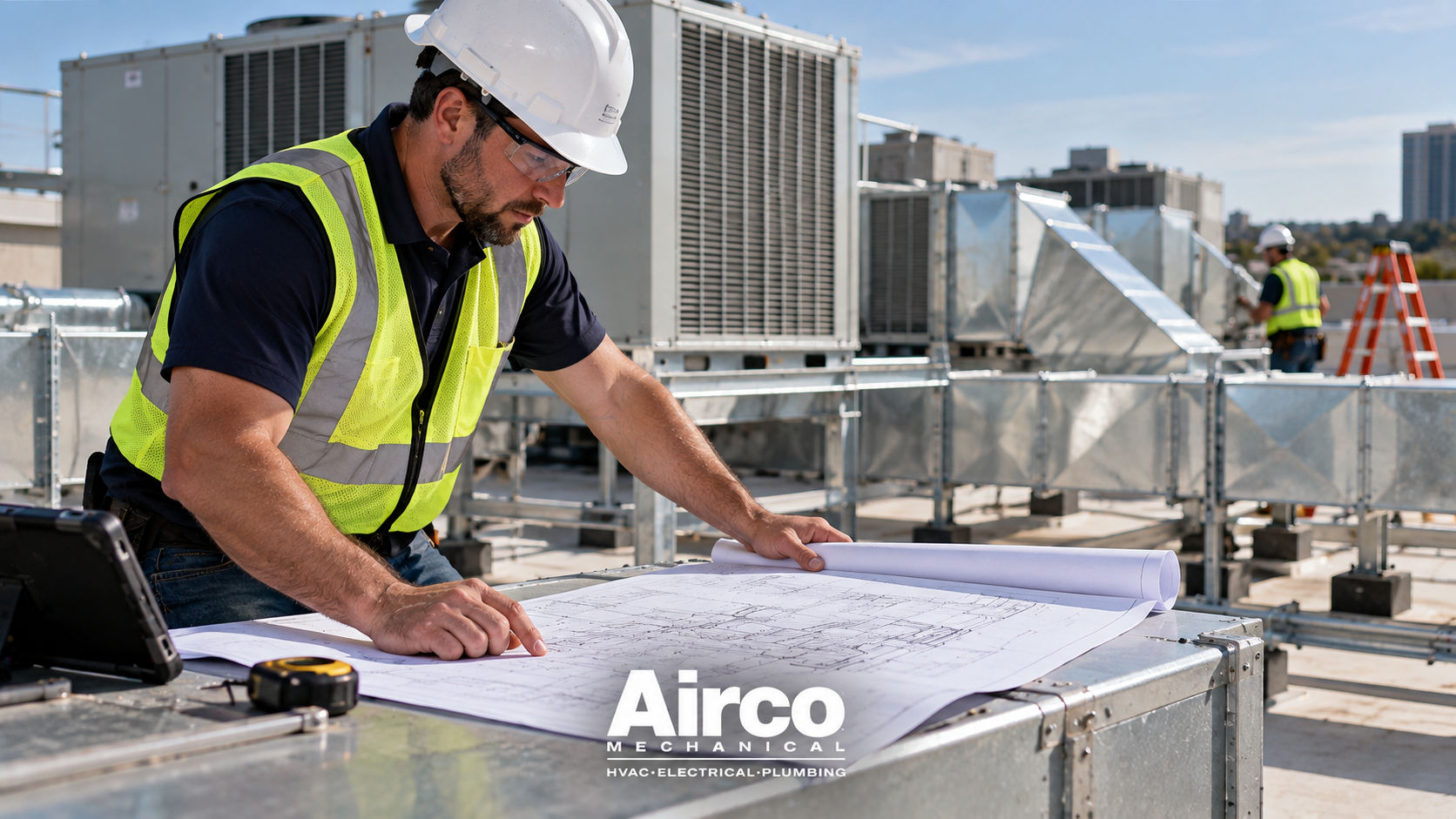
Commercial HVAC systems often require significant electrical power. If a facility upgrades HVAC equipment, the electrical system may also need review.
Airco Mechanical provides commercial HVAC construction and commercial HVAC services for buildings that need HVAC installation, repair, replacement, and service support.
Electrical coordination for HVAC may include:
- Rooftop unit power
- Disconnect locations
- Dedicated HVAC circuits
- Control wiring
- Thermostat wiring
- Panel capacity
- Motor loads
- Equipment startup needs
- Replacement equipment requirements
- Service access
HVAC and electrical planning should happen together when equipment is added or replaced.
Electrical Upgrades and Plumbing Equipment
Some commercial plumbing systems also need electrical power. Pumps, water heaters, controls, commercial kitchen equipment, and building systems may all require electrical coordination.
Airco Mechanical provides commercial plumbing services and commercial plumbing construction to support buildings where plumbing and electrical systems overlap.
Electrical planning may be needed for:
- Pumps
- Water heaters
- Recirculation systems
- Controls
- Booster equipment
- Commercial kitchen equipment
- Mechanical room systems
- Sump or ejector pumps where applicable
- Water treatment equipment
Coordinating electrical and plumbing requirements early helps avoid delays during installation.
Lighting Upgrades for Commercial Buildings
Lighting is one of the most common electrical upgrade areas. Poor lighting can affect safety, comfort, productivity, customer experience, and energy use.
Commercial lighting upgrades may include:
- Interior lighting replacement
- Exterior lighting improvements
- Parking lot lighting
- Warehouse lighting
- Emergency lighting
- Exit signs
- Motion sensors
- Occupancy controls
- Lighting schedules
- Display lighting
- Task lighting
- LED upgrades
Lighting upgrades should be planned around the building’s use, operating hours, safety needs, and maintenance access.
Emergency Lighting and Exit Signs
Emergency lighting and exit signs are important parts of commercial building safety. They help occupants move safely during power interruptions or emergencies.
Facility managers should regularly check:
- Exit sign visibility
- Emergency light function
- Battery backup condition
- Fixture damage
- Hallway and stair lighting
- Exterior egress lighting
- Testing records
- Replacement needs
If emergency lights do not work properly, the system should be inspected and repaired.
Surge Protection for Commercial Facilities
Commercial facilities often rely on computers, controls, HVAC systems, security systems, communication systems, and sensitive equipment. Power surges can damage equipment and disrupt operations.
Surge protection may be useful for:
- Office equipment
- IT systems
- HVAC controls
- Security systems
- Point-of-sale systems
- Communication equipment
- Production equipment
- Building automation systems
- Medical or specialty equipment
Surge protection should be evaluated as part of a broader electrical system review.
Electrical Room Planning
Electrical rooms should be organized, accessible, and safe to work in. As facilities grow, electrical rooms can become crowded or poorly labeled if upgrades are not managed properly.
Good electrical room planning includes:
- Clear access
- Proper labeling
- Enough working space
- Organized panels
- Updated directories
- Protected equipment
- No storage blocking panels
- Proper lighting
- Safe routing of conduit
- Clean documentation
A well-maintained electrical room makes future service easier.
Electrical System Upgrade Process
The upgrade process usually starts with an inspection and review of the building’s needs.
A typical process may include:
- Review current electrical concerns.
- Inspect panels and electrical rooms.
- Review equipment needs.
- Check current and future loads.
- Identify overloaded or outdated areas.
- Plan circuits, panels, or service upgrades.
- Coordinate with other trades.
- Schedule work around business operations.
- Complete installation.
- Test and document the upgrade.
The exact process depends on the size and condition of the facility.
Electrical Upgrade Planning Checklist
| Checklist Item | Status |
|---|---|
| Current electrical issues reviewed | |
| Breaker trips documented | |
| Panel capacity checked | |
| Equipment power needs confirmed | |
| Future expansion reviewed | |
| Lighting needs evaluated | |
| Emergency lighting checked | |
| Dedicated circuits identified | |
| Electrical room access reviewed | |
| HVAC power needs coordinated | |
| Plumbing equipment power needs reviewed | |
| Panel labels updated | |
| Surge protection considered | |
| Maintenance plan updated |
This checklist can help facility managers organize electrical planning.
Common Electrical Upgrade Mistakes
Commercial electrical upgrades should be planned carefully. Rushed or incomplete planning can create new problems.
Common mistakes include:
- Adding equipment without checking capacity
- Ignoring frequent breaker trips
- Using extension cords as a permanent solution
- Not planning dedicated circuits
- Forgetting future expansion
- Blocking electrical panel access
- Poor panel labeling
- Not coordinating with HVAC or plumbing equipment
- Delaying emergency lighting repairs
- Not documenting upgrades
- Waiting until failure occurs
- Choosing temporary fixes over proper upgrades
Avoiding these mistakes helps improve reliability and safety.
Electrical Maintenance After an Upgrade
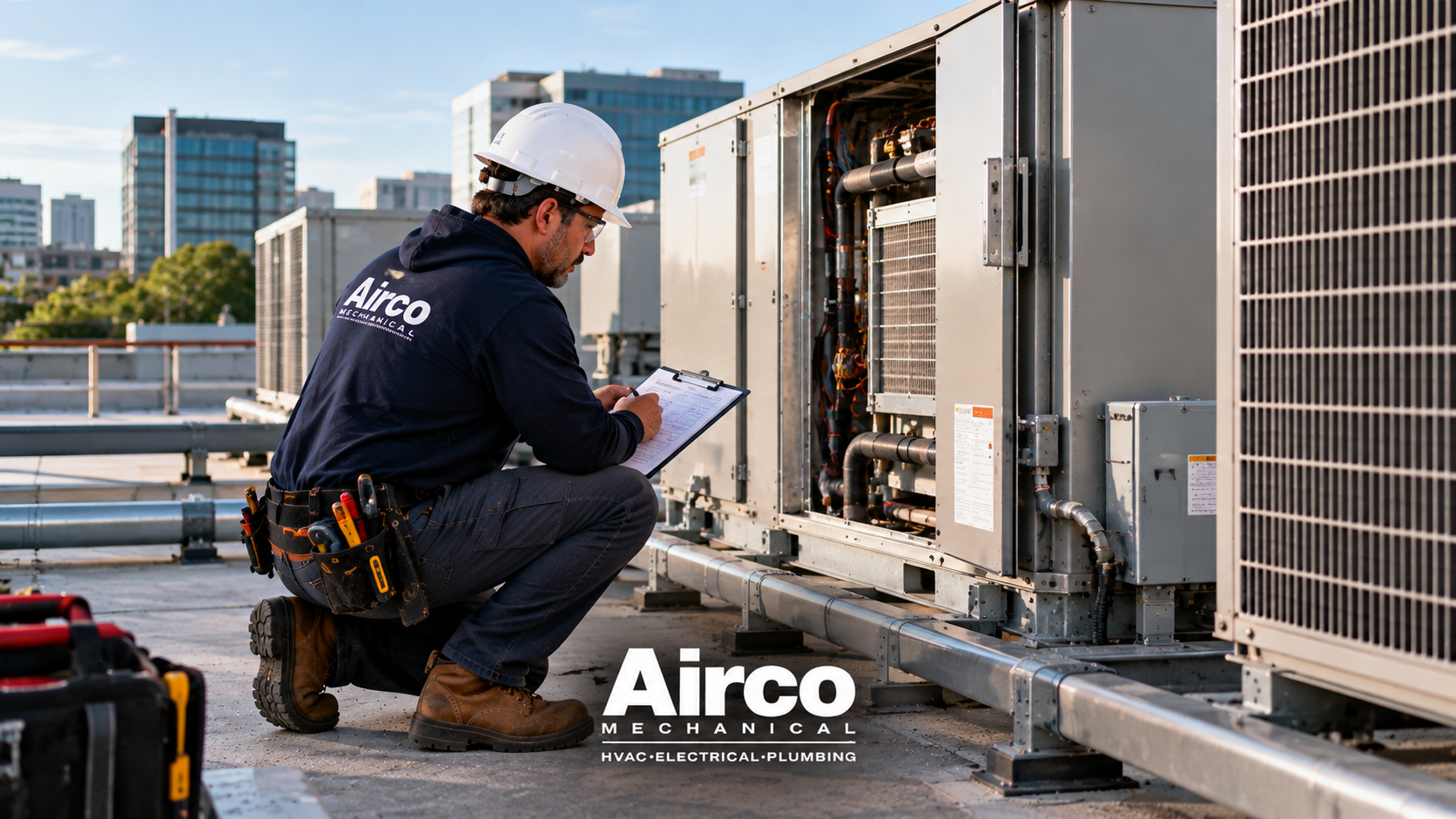
After an upgrade is complete, the system should be maintained properly. Electrical maintenance helps keep panels, circuits, lighting, and equipment connections organized and reliable.
Airco Mechanical provides commercial maintenance services to support HVAC, plumbing, electrical, and building system needs.
Electrical maintenance may include:
- Panel inspections
- Breaker checks
- Lighting review
- Emergency lighting testing
- Outlet and device checks
- Electrical room review
- Equipment connection review
- Service record updates
- Load changes documentation
- Future upgrade planning
Maintenance helps facility managers stay ahead of future electrical issues.
Electrical Upgrades During Renovations
Renovations and tenant improvements are common times to upgrade electrical systems. When walls, ceilings, and layouts are already changing, it may be easier to add circuits, improve lighting, relocate outlets, or update panels.
Electrical review is important when:
- A tenant space is being remodeled
- New equipment is being added
- A building use is changing
- Office layouts are changing
- A kitchen or production area is expanding
- HVAC equipment is being replaced
- Lighting is being redesigned
- More workstations are being added
Electrical planning during renovation helps avoid opening finished areas again later.
How VDC Can Help Electrical Upgrades
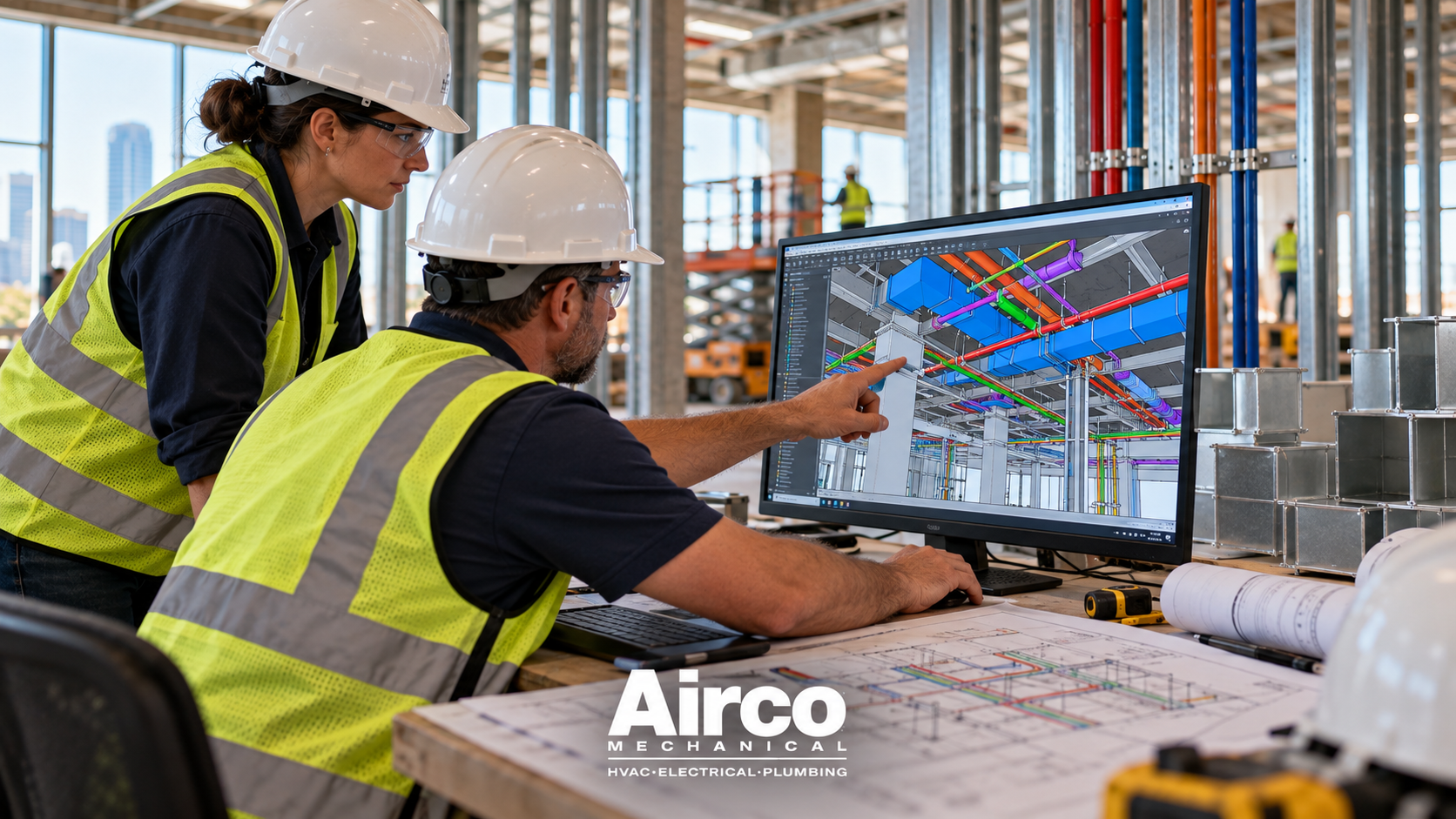
Virtual Design and Construction can help coordinate electrical upgrades with other building systems. This is especially useful in commercial projects where electrical conduit, panels, HVAC systems, plumbing, ductwork, and structural elements all share space.
Airco Mechanical’s Virtual Design & Construction VDC services can support MEP coordination, planning, and field layout.
VDC can help with:
- Electrical pathway coordination
- Panel location planning
- Equipment power coordination
- Conduit routing
- Clash detection
- Ceiling coordination
- Mechanical room planning
- Future access planning
- Reducing field conflicts
For growing facilities, VDC can help make upgrades more organized before installation begins.
When to Call a Commercial Electrician
A commercial electrician should be called when a facility has repeated electrical problems, is adding new equipment, or is planning expansion.
Call for help if:
- Breakers trip often
- Lights flicker
- Outlets or switches feel warm
- Electrical panels are full
- New equipment needs power
- Emergency lighting does not work
- Electrical room access is poor
- Equipment shuts down unexpectedly
- The building is being renovated
- Tenant space is changing
- Facility expansion is planned
Electrical issues should be handled by qualified professionals.
Conclusion
A commercial electrical system upgrade helps growing facilities support new equipment, increased demand, lighting improvements, HVAC needs, technology, tenant changes, and future expansion. By reviewing panel capacity, circuits, wiring, equipment power, lighting, emergency systems, maintenance needs, and long-term growth, facility managers can reduce electrical problems and improve building reliability.
For commercial electrical services, panel upgrades, dedicated circuits, lighting improvements, maintenance planning, and MEP coordination, contact Airco Mechanical today.
FAQs
What is a commercial electrical system upgrade?
It is the process of improving or expanding a building’s electrical system to support current and future power needs.
How do I know if my building needs an electrical upgrade?
Warning signs include frequent breaker trips, flickering lights, warm outlets, full panels, limited outlets, or new equipment that needs more power.
What does an electrical upgrade include?
It may include panel upgrades, new circuits, dedicated equipment power, lighting improvements, wiring updates, emergency lighting, and load planning.
Should electrical upgrades be planned during renovations?
Yes. Renovations are a good time to review electrical capacity, add circuits, improve lighting, and prepare for future needs.
Who should handle commercial electrical upgrades?
A qualified commercial electrician should inspect, plan, and perform electrical upgrades.