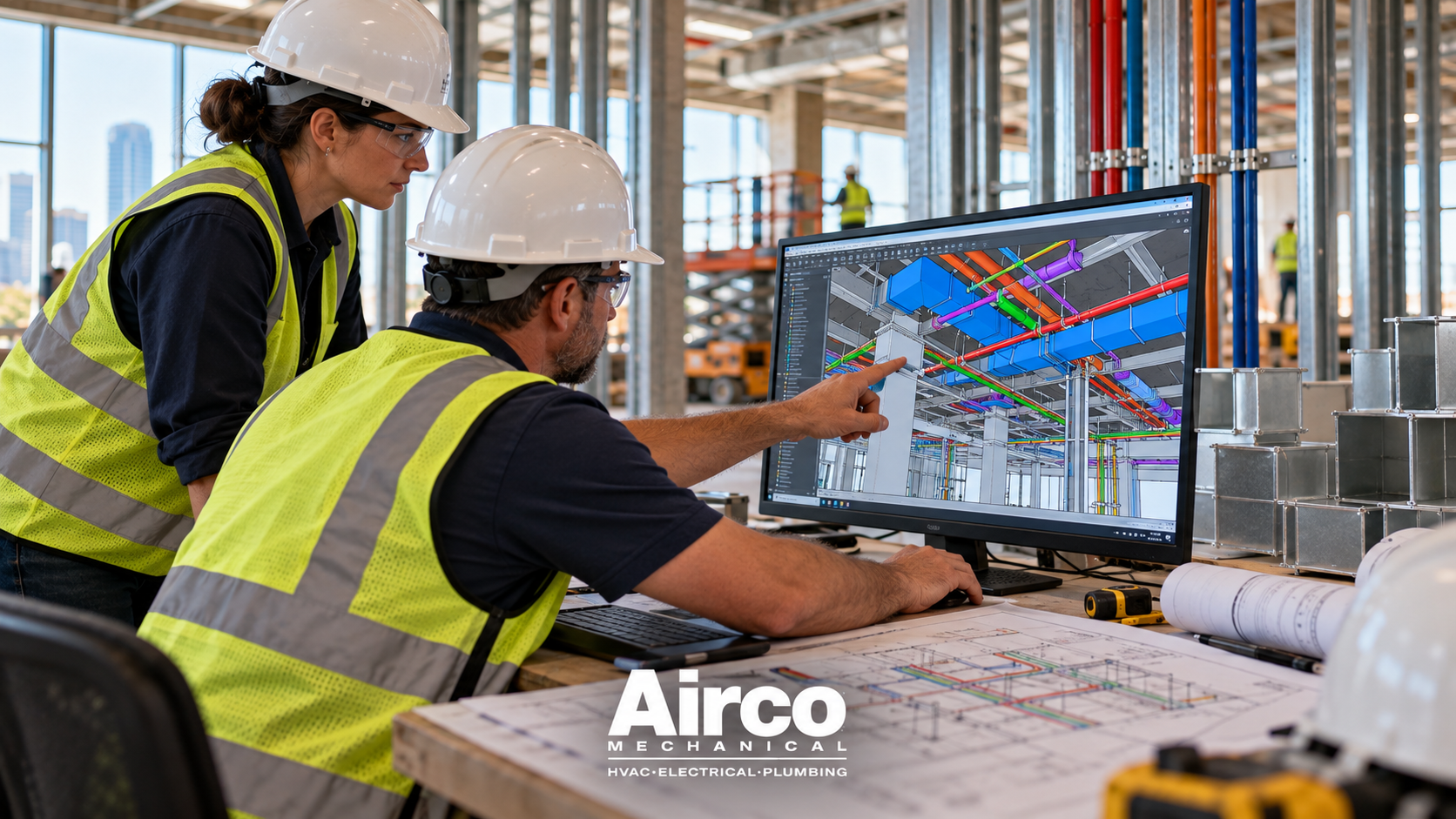
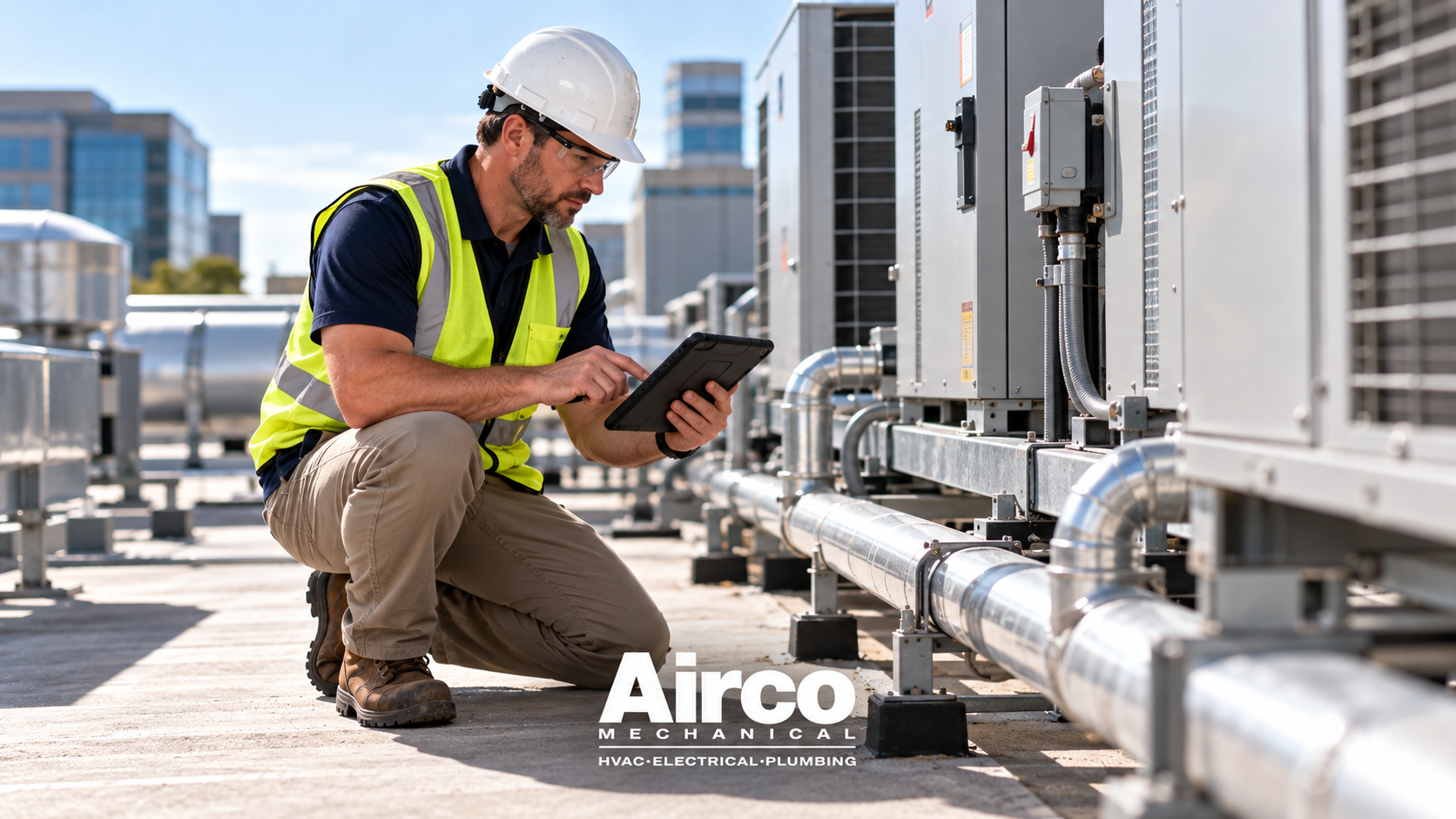
Commercial building maintenance is the ongoing process of inspecting, servicing, repairing, and documenting the systems that keep a facility safe, functional, comfortable, and reliable. For facility managers, this usually includes HVAC systems, plumbing systems, electrical systems, life-safety support systems, equipment rooms, roof areas, drains, valves, panels, filters, controls, and service records.
A commercial building can look fine from the outside while small system issues are developing inside. A clogged drain, dirty HVAC filter, worn belt, leaking valve, overloaded circuit, poor airflow, failing pump, or ignored service warning can turn into downtime if it is not handled early. That is why a structured maintenance plan is important for offices, retail spaces, warehouses, restaurants, schools, medical offices, churches, industrial buildings, and multi-tenant facilities.
Airco Mechanical provides commercial maintenance services to help facility teams stay ahead of system problems, reduce emergency repairs, and keep commercial buildings operating more smoothly.
What Commercial Building Maintenance Includes
Commercial building maintenance covers the systems, equipment, and service tasks required to keep a facility working properly. The exact scope depends on the building type, system age, occupancy, equipment load, and business operations.
Common maintenance areas include:
- HVAC equipment
- Plumbing systems
- Electrical panels and circuits
- Lighting systems
- Drains and sewer lines
- Water heaters
- Pumps
- Valves
- Restroom fixtures
- Mechanical rooms
- Rooftop units
- Filters and belts
- Thermostats and controls
- Emergency lighting
- Service records
- Preventive inspections
A good maintenance program is not only reactive. It should include routine inspection, scheduled service, documentation, and planning for future repairs or replacements.
Why Facility Managers Need a Maintenance Plan
Facility managers are responsible for keeping a building operational while controlling costs, reducing disruption, and responding to tenant or staff concerns. Without a maintenance plan, repairs often happen only after something breaks.
That can lead to:
- Unexpected downtime
- Higher emergency repair costs
- Comfort complaints
- Water damage
- Electrical issues
- Shorter equipment life
- Poor energy performance
- Missed inspection items
- Tenant dissatisfaction
- Delayed repairs
- Repeated service calls
A planned maintenance approach helps facility managers stay organized and make better decisions before problems become urgent.
ENERGY STAR notes that operation and maintenance programs can support energy-efficient building performance by keeping systems operating correctly and identifying equipment that may be running when it should not.
Main Systems in Commercial Building Maintenance
A commercial maintenance plan should cover all major building systems, not just one trade.
| System | What to Maintain | Why It Matters |
|---|---|---|
| HVAC | Filters, belts, coils, drains, controls, airflow, equipment operation | Comfort, air quality, energy use, equipment life |
| Plumbing | Fixtures, valves, drains, water heaters, leaks, pumps | Water control, sanitation, property protection |
| Electrical | Panels, circuits, lighting, emergency systems, equipment power | Safety, reliability, business operations |
| Controls | Thermostats, sensors, schedules, automation | Comfort, energy control, system performance |
| Drainage | Floor drains, roof drains, sewer lines, cleanouts | Prevents backups and water damage |
| Mechanical rooms | Equipment access, cleanliness, leaks, labeling | Easier service and safer operation |
| Documentation | Service logs, inspection records, repair history | Better planning and accountability |
Each system should have a clear inspection and service schedule.
HVAC Maintenance for Commercial Buildings
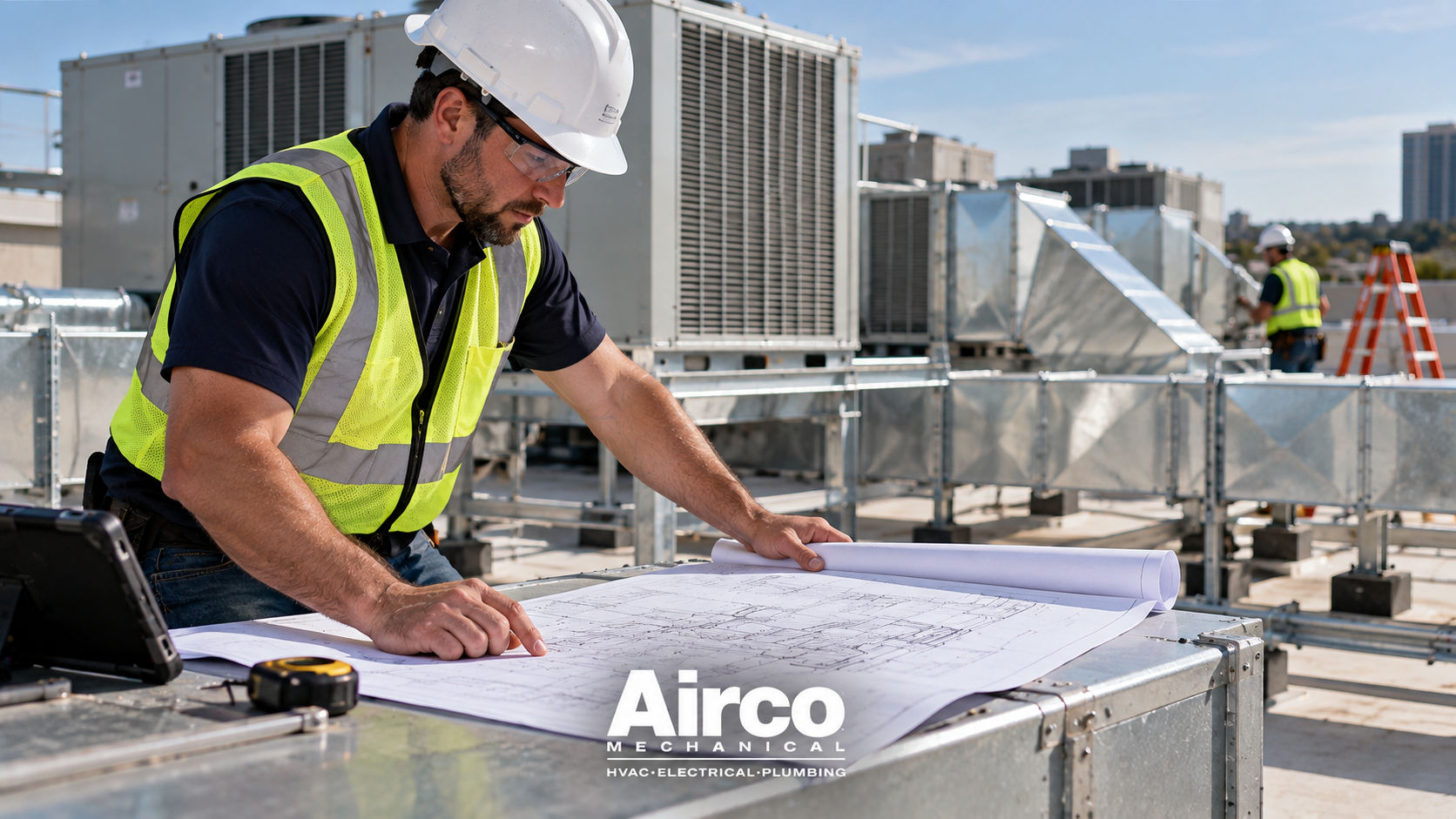
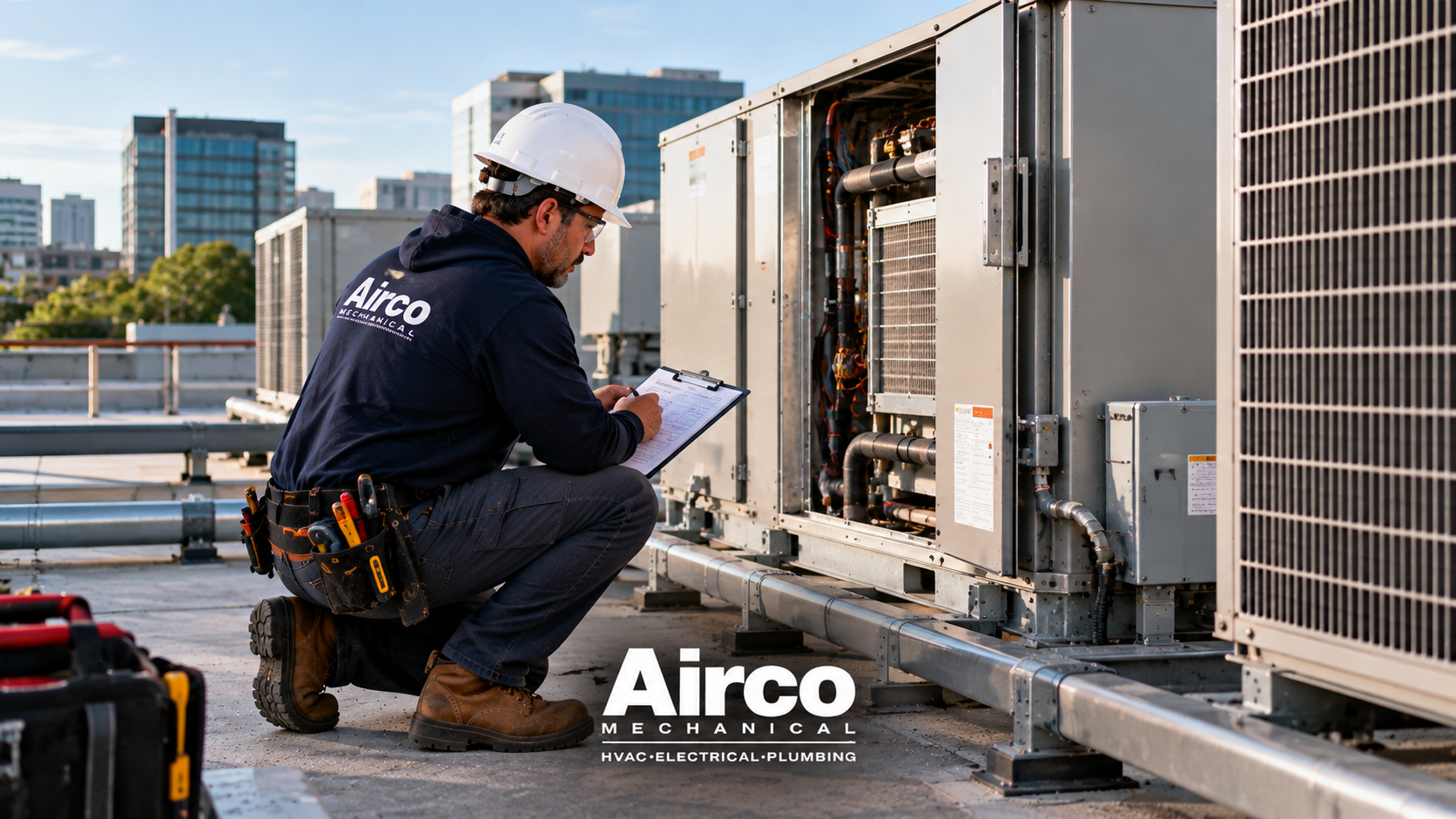
HVAC is one of the most important parts of commercial building maintenance. It affects comfort, indoor air quality, equipment life, operating costs, and tenant satisfaction.
Airco Mechanical provides commercial HVAC services for buildings that need HVAC repairs, service, inspection, and system support.
Common HVAC maintenance tasks include:
- Replacing filters
- Cleaning coils
- Checking belts
- Inspecting motors
- Checking refrigerant-related performance issues
- Inspecting condensate drains
- Testing thermostats
- Checking airflow
- Reviewing equipment startup and shutdown
- Inspecting rooftop units
- Checking unusual noise or vibration
- Reviewing system scheduling
- Documenting service history
Ignoring HVAC maintenance can lead to hot and cold spots, high utility use, system strain, comfort complaints, and unexpected breakdowns.
Plumbing Maintenance for Commercial Buildings
Plumbing maintenance helps prevent leaks, clogs, fixture failures, water damage, odor issues, and emergency service calls.
Airco Mechanical provides commercial plumbing services for plumbing repair, inspection, maintenance, and system troubleshooting.
Commercial plumbing maintenance may include:
- Checking for leaks
- Inspecting restroom fixtures
- Testing shutoff valves
- Checking water heaters
- Inspecting floor drains
- Reviewing cleanout access
- Clearing slow drains
- Checking backflow prevention devices
- Inspecting pumps
- Reviewing water pressure issues
- Checking visible pipe corrosion
- Inspecting mechanical room plumbing
- Documenting recurring issues
Small plumbing problems can become expensive if they are ignored. A slow leak under a sink or around a water heater can damage walls, floors, cabinets, and equipment areas.
Electrical Maintenance for Commercial Buildings
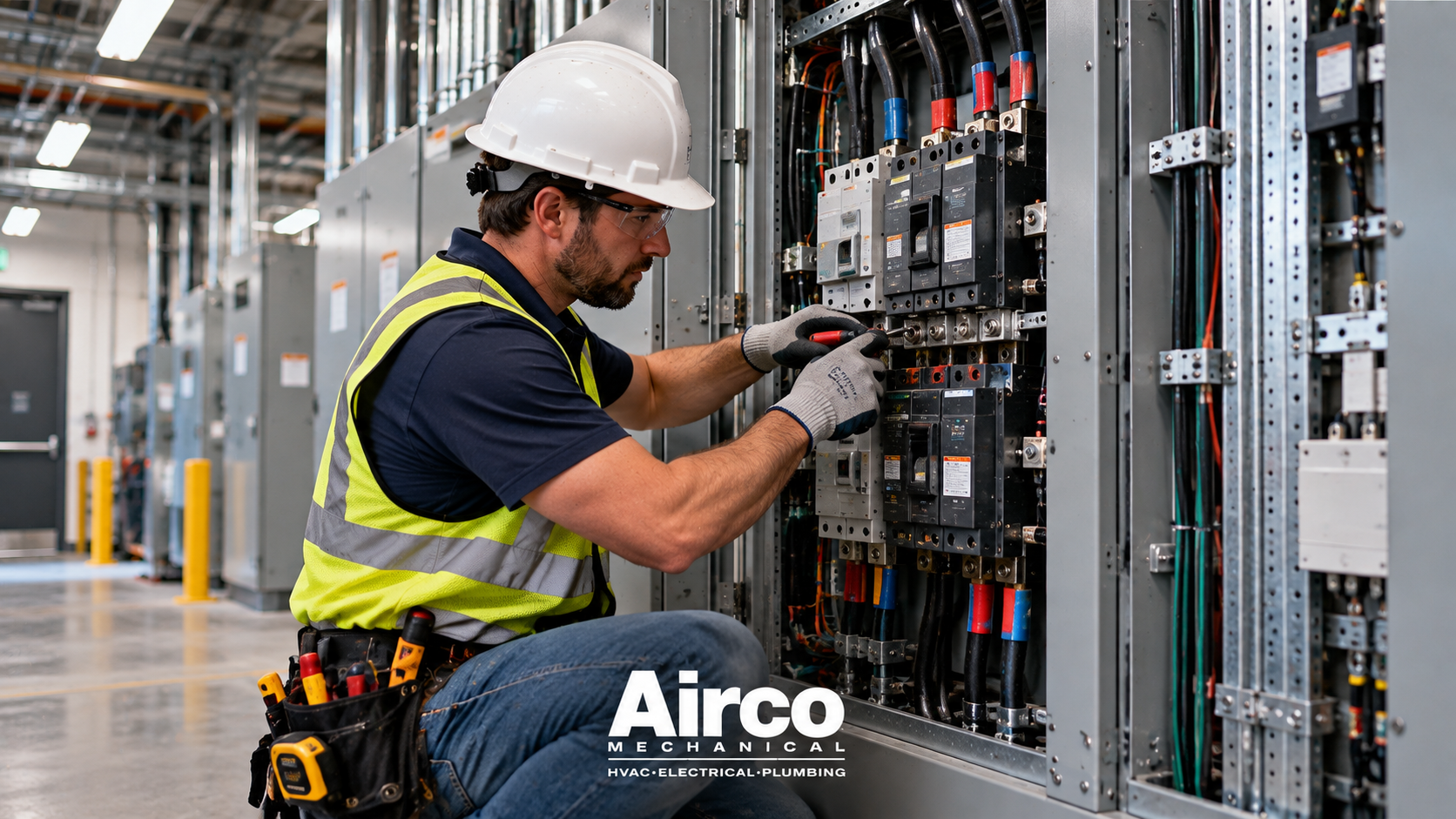
Electrical maintenance helps support safe and reliable building operation. Commercial buildings may have lighting systems, electrical panels, dedicated circuits, equipment connections, emergency lighting, controls, signage, and tenant power needs.
Airco Mechanical provides commercial electrical services for facilities that need electrical support, repairs, upgrades, and service.
Electrical maintenance may include:
- Inspecting panels
- Checking breakers
- Reviewing overloaded circuits
- Testing emergency lighting
- Checking exit signs
- Inspecting lighting controls
- Reviewing dedicated equipment circuits
- Checking loose or damaged devices
- Evaluating power needs for new equipment
- Reviewing recurring tripped breakers
- Inspecting exterior lighting
- Documenting repair history
Electrical problems should be handled by qualified professionals. Facility staff should not ignore heat, buzzing, burning smells, flickering lights, or repeated breaker trips.
Preventive Maintenance vs. Reactive Repairs
Preventive maintenance means inspecting and servicing systems before failure. Reactive repair means waiting until something breaks and then fixing it.
| Category | Preventive Maintenance | Reactive Repairs |
|---|---|---|
| Timing | Scheduled before failure | After problem appears |
| Cost control | Easier to plan | Often unpredictable |
| Downtime | Usually lower | Can be higher |
| Tenant impact | Reduced | More disruptive |
| Equipment life | Can help extend life | May shorten life if issues repeat |
| Documentation | Planned and tracked | Often urgent and scattered |
| Facility control | More proactive | More reactive |
A good commercial maintenance plan uses preventive service to reduce the number of emergency repairs.
Daily Maintenance Tasks
Some tasks should be checked frequently by facility staff or building managers.
Daily or frequent checks may include:
- Check for visible leaks
- Listen for unusual equipment noises
- Watch for comfort complaints
- Check restrooms for fixture issues
- Confirm lighting is working
- Look for standing water
- Check drain odors
- Make sure mechanical rooms are accessible
- Review building automation alerts if available
- Confirm exterior doors and service areas are secure
These checks do not replace professional service, but they help identify issues early.
Monthly Maintenance Tasks
Monthly maintenance can help catch smaller issues before they grow.
Monthly tasks may include:
- Inspect HVAC filters
- Review service logs
- Check thermostat settings
- Inspect restroom plumbing
- Check floor drains
- Inspect visible piping
- Review electrical panel access
- Check emergency lighting indicators
- Inspect roof areas if accessible and safe
- Confirm equipment rooms are clear
- Review tenant complaints or recurring service requests
Monthly review helps facility managers spot patterns.
Seasonal Maintenance Tasks
Seasonal maintenance is especially important for HVAC performance and weather-related building protection.
Seasonal tasks may include:
- Prepare cooling systems before summer
- Prepare heating systems before winter
- Inspect rooftop units
- Check condensate drains
- Review roof drains and storm drainage
- Inspect exterior hose bibbs
- Check sump pumps where present
- Review insulation around exposed piping
- Inspect outdoor lighting
- Review building controls and schedules
- Check ventilation performance
Seasonal planning helps reduce equipment stress during peak demand.
Annual Maintenance Tasks
Annual maintenance gives facility managers a broader view of building performance and upcoming needs.
Annual tasks may include:
- Full HVAC system inspection
- Plumbing system review
- Electrical system review
- Water heater inspection
- Backflow testing where required
- Drainage inspection
- Emergency lighting test
- Review maintenance budget
- Review equipment age
- Update asset list
- Review service contracts
- Plan capital improvements
- Update maintenance documentation
Annual maintenance planning helps facility managers prepare for future repairs and replacements.
Commercial Maintenance Schedule Example
| Frequency | Maintenance Focus | Example Tasks |
|---|---|---|
| Daily / Weekly | Basic visual checks | Leaks, odors, lighting, comfort complaints |
| Monthly | Routine building review | Filters, fixtures, drains, access areas |
| Quarterly | System performance check | HVAC operation, plumbing checks, electrical review |
| Seasonal | Weather-related preparation | Heating, cooling, storm drainage, roof units |
| Annual | Full system review | Asset review, major inspections, budget planning |
The exact schedule should be based on building size, usage, system age, and operating demands.
Maintenance for Multi-Tenant Buildings
Multi-tenant buildings need careful maintenance because one system problem can affect several occupants. Restroom issues, HVAC complaints, lighting problems, power interruptions, and plumbing leaks can quickly become tenant concerns.
Maintenance priorities may include:
- Clear tenant reporting process
- Fast response to leaks
- Shared restroom inspections
- HVAC comfort tracking
- Lighting and parking lot safety
- After-hours emergency plan
- Clear service documentation
- Access planning for occupied spaces
- Communication during repairs
Facility managers should track repeated issues by tenant area, floor, system, or equipment type.
Maintenance for Restaurants and Food Service Spaces
Restaurants and commercial kitchens place heavy demands on plumbing, HVAC, electrical, and drainage systems.
Important maintenance areas include:
- Kitchen drains
- Floor sinks
- Grease-related plumbing
- Hot water systems
- Ventilation
- Make-up air systems
- Electrical circuits for equipment
- Refrigeration-related power needs
- Restroom fixtures
- Mop sinks
- Handwashing stations
Food service buildings often need more frequent maintenance because the systems are used heavily every day.
Maintenance for Warehouses and Industrial Spaces
Warehouse and industrial facilities may have large spaces, equipment loads, dock areas, production equipment, ventilation needs, and high electrical demand.
Maintenance priorities may include:
- Large HVAC units
- Exhaust systems
- Electrical panels
- Equipment power
- Lighting systems
- Floor drains
- Utility areas
- Roof drainage
- Loading dock equipment support
- Safety lighting
- Mechanical ventilation
For these facilities, maintenance planning should also consider production schedules and operational downtime.
Maintenance Logs and Documentation
Documentation is one of the most useful tools for facility managers. A maintenance log helps track what was serviced, when it was serviced, what problems were found, and what needs follow-up.
Maintenance documentation may include:
- Equipment list
- Service dates
- Technician notes
- Repairs completed
- Parts replaced
- Inspection results
- Filter changes
- Water leaks
- Electrical issues
- Tenant complaints
- Recurring problems
- Warranty information
- Recommended future repairs
Good records make it easier to plan budgets and justify repairs.
Signs a Building Maintenance Plan Needs Improvement
A commercial building may need a stronger maintenance plan if problems are happening too often.
Warning signs include:
- Frequent emergency repairs
- Repeated HVAC complaints
- Recurring drain clogs
- Multiple plumbing leaks
- Breakers tripping often
- High utility bills
- Equipment running after hours
- Poor service records
- No clear inspection schedule
- Delayed repairs
- Tenant complaints increasing
- Mechanical rooms are cluttered
- No asset list or equipment history
If these signs appear, the building may need a more structured maintenance plan.
How Maintenance Reduces Downtime
Downtime can affect tenants, employees, customers, and business operations. Maintenance reduces downtime by identifying problems early and keeping systems serviceable.
Maintenance can help reduce:
- HVAC shutdowns
- Restroom closures
- Water leaks
- Drain backups
- Lighting outages
- Electrical interruptions
- Equipment failures
- Emergency service calls
- Tenant disruption
- After-hours repairs
A planned maintenance schedule gives facility managers more control.
Maintenance and Energy Efficiency
Maintenance can also support energy efficiency. Dirty filters, poor airflow, leaking valves, incorrect thermostat schedules, running equipment after hours, and neglected controls can increase operating costs.
ENERGY STAR recommends integrating energy efficiency into facility operation and maintenance programs, including attention to operating schedules and equipment performance.
Energy-related maintenance tasks may include:
- Replacing HVAC filters
- Checking equipment schedules
- Reviewing thermostat settings
- Inspecting economizer operation where applicable
- Checking lighting schedules
- Reviewing after-hours equipment use
- Inspecting insulation on piping
- Checking air distribution
- Reviewing controls
- Tracking utility trends
Maintenance and energy performance are closely connected.
Building Maintenance Checklist for Facility Managers
| Maintenance Item | Status |
|---|---|
| HVAC filters checked | |
| HVAC service schedule updated | |
| Plumbing leaks inspected | |
| Restroom fixtures checked | |
| Floor drains reviewed | |
| Water heaters inspected | |
| Electrical panels accessible | |
| Emergency lighting checked | |
| Exterior lighting reviewed | |
| Mechanical rooms clear | |
| Roof drains inspected | |
| Service logs updated | |
| Tenant complaints reviewed | |
| Equipment age tracked | |
| Future repairs planned |
This checklist can be adjusted based on the building type and system needs.
Common Maintenance Mistakes
Facility managers should avoid these common mistakes:
- Waiting until systems fail
- Not documenting repairs
- Ignoring small leaks
- Skipping filter changes
- Blocking mechanical room access
- Not checking roof drains
- Ignoring tenant comfort complaints
- Not tracking repeated issues
- Delaying electrical concerns
- Not planning seasonal HVAC service
- Forgetting about backflow testing
- Not budgeting for equipment replacement
- Using only emergency repairs instead of planned maintenance
These mistakes can increase costs and disruption over time.
When to Call a Commercial Maintenance Contractor
A commercial maintenance contractor should be contacted when building systems need professional inspection, repair, testing, or service planning.
Call for support when:
- HVAC systems are unreliable
- Plumbing leaks keep returning
- Drains clog repeatedly
- Electrical issues continue
- Equipment is aging
- Tenants complain often
- Maintenance records are incomplete
- Emergency repairs are increasing
- The building needs a service schedule
- You need help planning future repairs
Professional maintenance support helps facility managers stay ahead of building problems.
Conclusion
Commercial building maintenance helps facility managers protect building systems, reduce downtime, control repair costs, and keep occupants comfortable. A good maintenance plan should include HVAC, plumbing, electrical, drainage, equipment access, documentation, seasonal service, and long-term repair planning.
For commercial maintenance, HVAC service, plumbing service, electrical support, and ongoing building system care, contact Airco Mechanical today.
FAQs
What is commercial building maintenance?
Commercial building maintenance is the routine inspection, service, repair, and documentation of building systems such as HVAC, plumbing, electrical, drainage, and equipment areas.
Why is maintenance important for facility managers?
It helps reduce downtime, emergency repairs, tenant complaints, water damage, comfort issues, and unexpected costs.
What should be included in a commercial maintenance plan?
A plan should include HVAC service, plumbing checks, electrical review, drain inspections, equipment records, seasonal tasks, and repair planning.
How often should commercial buildings be maintained?
The schedule depends on building type, system age, usage, and equipment needs. Many buildings use monthly, quarterly, seasonal, and annual maintenance tasks.
When should a facility manager call a contractor?
Call when repairs keep repeating, equipment is unreliable, systems need inspection, or the building needs a structured maintenance plan.