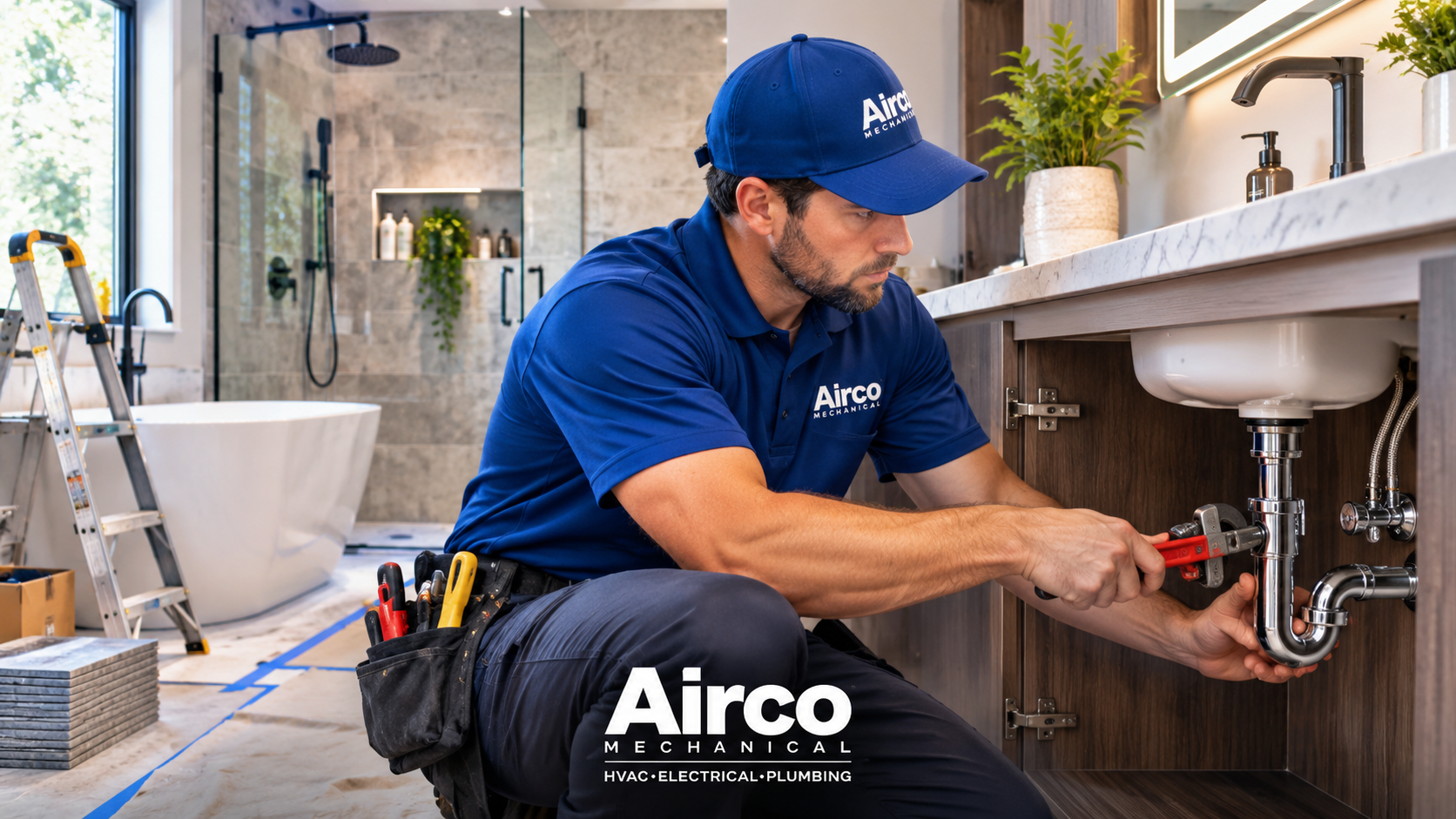
Bathroom remodeling plumbing tips can help homeowners plan a renovation that improves comfort, functionality, water efficiency, and long-term reliability. Whether you are replacing a toilet, upgrading a shower, installing a new vanity, or renovating an entire bathroom, the condition and layout of your existing plumbing can influence the project’s cost and complexity. Before purchasing fixtures or beginning construction, professional general plumbing services can help identify plumbing changes, potential repairs, and installation requirements.
A successful bathroom remodel involves more than selecting attractive tiles, cabinets, and fixtures. Water supply connections, drainage, pipe locations, shower valves, ventilation, and hot water demand all need consideration. Airco Mechanical provides residential plumbing installation, repair, replacement, and remodeling services for homeowners in Austin, Round Rock, and surrounding Central Texas communities.
Understanding how bathroom plumbing works before starting a renovation can help you avoid unexpected expenses and choose fixtures that fit your home’s needs.
Why Plumbing Planning Matters Before a Bathroom Remodel
Plumbing is one of the most important parts of bathroom remodeling because most of the system is hidden behind walls, beneath floors, or inside cabinets.
A bathroom may look modern after renovation, but problems with drain connections, water pressure, aging supply lines, or poorly installed fixtures can affect how well it functions.
For example, replacing a bathroom vanity without checking the existing drain location may create installation complications. Similarly, converting a bathtub into a walk-in shower may require changes to the drain, shower valve, waterproofing, and floor construction.
Planning these details before demolition allows homeowners to make informed decisions about the renovation.
It also helps contractors identify work that should be completed before new finishes are installed.
What Plumbing Work Is Included in Bathroom Remodeling?
The plumbing work required depends on whether the project is a minor fixture upgrade or a complete bathroom renovation.
Replacing a faucet in the same location is usually less involved than relocating a shower or installing an additional bathroom.
| Bathroom Remodeling Project | Potential Plumbing Work |
|---|---|
| Faucet replacement | Supply connection inspection and faucet installation |
| Vanity replacement | Drain alignment, supply valves, sink connections |
| Toilet replacement | Flange inspection, water connection, fixture installation |
| Shower renovation | Shower valve, drain, supply piping, fixture installation |
| Bathtub replacement | Drain assembly, supply connections, tub spout and valve |
| Walk-in shower conversion | Drain location, shower valve, waterproofing coordination |
| Complete bathroom remodel | Plumbing inspection, fixture layout, repairs, replacements |
| Bathroom expansion | New supply lines, drainage, venting, and fixture connections |
Professional bathroom plumbing services can help homeowners evaluate these requirements before purchasing equipment or scheduling installation.
Bathroom Remodeling Plumbing Tips for Choosing the Right Layout
The existing bathroom layout has a significant influence on remodeling costs.
Keeping sinks, toilets, showers, and bathtubs in their current locations can reduce the need for extensive plumbing modifications.
Moving fixtures may require additional supply piping, drainage changes, wall access, or floor modifications.
For example, relocating a toilet can involve more work than replacing a vanity because toilet drainage requires specific pipe dimensions, slope, and connection arrangements.
Before changing the layout, homeowners should consider the following questions:
| Planning Question | Why It Matters |
|---|---|
| Can existing fixtures stay in place? | May reduce pipe relocation work |
| Will the new vanity fit the drain location? | Prevents installation conflicts |
| Does the shower need a new drain position? | Can affect flooring and plumbing costs |
| Is there enough room for the toilet? | Supports comfortable use and code compliance |
| Are existing supply pipes in good condition? | Helps prevent future leaks |
| Will new fixtures need different connections? | Affects materials and labor requirements |
A plumber can evaluate the existing connections and help determine whether the desired bathroom layout is practical.
Should You Replace Old Plumbing During a Bathroom Remodel?
A renovation creates an opportunity to inspect plumbing that may normally be hidden.
When walls or floors are opened, contractors may discover aging pipes, deteriorated fittings, water damage, or plumbing connections that need attention.
However, replacing all plumbing during every bathroom remodel is not necessary.
If the existing pipes are in good condition, correctly installed, and compatible with the new fixtures, they may continue to be suitable.
Replacement should be considered when there is visible deterioration, recurring leakage, damaged connections, or evidence of broader plumbing problems.
Repairing Existing Plumbing vs. Installing New Pipes
The decision depends on the condition of the system and the planned renovation.
Minor damage to an accessible connection may be repairable without replacing surrounding piping.
On the other hand, an aging pipe system with repeated leaks may justify replacement while the walls are already open.
A professional inspection can help homeowners understand whether targeted repair or larger plumbing upgrades offer better long-term value.
Choosing a New Toilet for Your Bathroom
A toilet is one of the most important fixtures to consider during remodeling.
Homeowners should compare dimensions, flushing performance, comfort, water efficiency, and installation requirements before purchasing.
A toilet that looks suitable in a showroom may not fit the available bathroom space or existing drain arrangement.
The toilet rough-in measurement is particularly important because it determines the distance between the finished wall and the center of the toilet’s floor drain connection.
The existing toilet flange should also be inspected before installation.
Are Water-Efficient Toilets Worth Buying?
Water-efficient toilets can reduce water consumption without sacrificing normal flushing performance when properly selected.
According to the EPA WaterSense residential toilet guidance, WaterSense-labeled toilets use 1.28 gallons per flush or less and are independently certified for efficiency and performance.
Older toilets may use considerably more water per flush.
For homeowners replacing older fixtures, choosing a WaterSense-labeled model may help reduce household water use over time.
What to Consider When Remodeling a Shower
Shower remodeling involves several plumbing and construction decisions.
A homeowner may want to replace a traditional showerhead, install a rainfall shower, add a handheld sprayer, or convert a bathtub into a walk-in shower.
Each option can have different installation requirements.
Shower Valve Compatibility
The shower valve controls water flow and temperature.
Before purchasing a new trim kit or shower fixture, homeowners should confirm compatibility with the existing valve.
Not all shower handles and trim kits work with every valve manufacturer or model.
If the existing valve is old, damaged, or incompatible with the desired fixtures, replacement may be necessary.
Shower Drain Location
The location of the shower drain can affect the shower base, tile layout, and required plumbing work.
Some shower systems require a particular drain position or approved drain assembly.
When converting a bathtub into a shower, the existing drain arrangement may need evaluation to confirm that it is suitable for the proposed installation.
The plumber and waterproofing contractor should coordinate before the shower floor is completed.
Water Pressure and Shower Performance
Installing additional showerheads or body sprays may increase water demand.
However, homeowners should not assume that adding more shower fixtures will automatically improve the experience.
The available water pressure, supply pipe capacity, fixture flow rates, and hot water system need to support the intended design.
A plumbing inspection can identify limitations before new shower equipment is purchased.
Bathtub Replacement vs. Walk-In Shower Conversion
One of the most common bathroom remodeling decisions is whether to keep a bathtub or install a walk-in shower.
Both options have practical benefits.
A bathtub may be useful for households with young children or homeowners who prefer bathing.
A walk-in shower may provide easier access, more usable floor space, and a layout that better suits some homeowners.
However, changing from a bathtub to a shower can involve more plumbing work than simply replacing one tub with another.
| Consideration | Bathtub Replacement | Walk-In Shower Conversion |
|---|---|---|
| Drain location | May remain compatible | May require adjustment |
| Shower valve | Existing valve may be reusable | May need replacement or modification |
| Floor construction | Depends on tub design | Requires suitable shower floor and waterproofing |
| Accessibility | Requires stepping over tub edge | Can be designed with lower entry |
| Plumbing complexity | Often lower if layout is unchanged | May be higher depending on configuration |
| Remodeling cost | Depends on product and installation | Depends on drainage, waterproofing, and layout |
Homeowners should compare the complete installation requirements rather than considering fixture prices alone.
Buying Bathroom Faucets, Sinks, and Vanities
A bathroom vanity upgrade can improve storage, organization, and appearance.
However, a new vanity must also work with the home’s plumbing connections.
A floating vanity, for example, may require a different drain arrangement or additional wall preparation compared with a traditional floor-mounted cabinet.
Similarly, changing from a single sink to a double-sink vanity can require additional water supply and drainage connections.
How to Choose Compatible Bathroom Fixtures
Before purchasing, check the vanity width, countertop configuration, sink dimensions, faucet mounting arrangement, and available plumbing space.
| Fixture | Important Buying Consideration |
|---|---|
| Bathroom faucet | Mounting-hole spacing, finish, water efficiency |
| Bathroom sink | Dimensions, drain position, countertop compatibility |
| Vanity cabinet | Width, plumbing clearance, storage requirements |
| Showerhead | Flow rate, mounting compatibility, spray features |
| Toilet | Rough-in measurement, flushing performance, dimensions |
| Bathtub | Size, drain location, installation requirements |
A professional plumber can identify whether the planned fixtures will require new connections or modifications to existing plumbing.
Water-Efficient Fixtures for Bathroom Remodeling
Bathroom remodeling is a good opportunity to consider fixtures that use water more efficiently.
The EPA WaterSense program identifies toilets, bathroom sink faucets, and showerheads that meet established water-efficiency and performance criteria.
WaterSense-labeled bathroom sink faucets use a maximum of 1.5 gallons per minute at 60 psi, while labeled showerheads use no more than 2.0 gallons per minute.
Selecting compatible water-efficient fixtures may help lower water consumption without compromising everyday usability.
For additional information, homeowners can review the EPA’s WaterSense guidance for homes.
Water efficiency should be considered alongside fixture quality, ease of maintenance, and the household’s actual needs.
How Much Does Bathroom Remodeling Plumbing Cost?
Bathroom remodeling plumbing costs depend on the scope of work, existing plumbing condition, fixture selections, and whether components need to be relocated.
A basic faucet or toilet replacement may require relatively limited plumbing labor.
However, relocating a shower, converting a bathtub, installing a double vanity, or replacing deteriorating pipes can increase project costs.
Main Factors Affecting Plumbing Costs
| Cost Factor | How It Affects the Project |
|---|---|
| Fixture replacement | New products, fittings, and installation labor |
| Plumbing relocation | Additional piping, drainage, and wall or floor work |
| Existing pipe condition | Repairs may be needed before installation |
| Shower conversion | Drain modifications and waterproofing coordination |
| Vanity changes | Possible supply and drain relocation |
| Permit requirements | Applicable permit and inspection costs |
| Hidden damage | Unplanned repairs after demolition |
| Product selection | Premium fixtures may increase material costs |
Homeowners should request estimates that clearly explain the planned work and identify any potential additional expenses.
Keeping the existing fixture layout may reduce some plumbing costs, but it does not eliminate the need to inspect aging components or correct installation problems.
Do You Need a Plumbing Permit for Bathroom Remodeling in Austin?
Permit requirements depend on the work being performed and the property’s location.
Some minor fixture repairs or replacements may be exempt from permitting when they do not involve more extensive plumbing changes.
However, projects involving new plumbing installations, relocating fixtures, or certain shower and bathtub changes may require permits and inspections.
The City of Austin’s work exempt from building permits guidance specifically explains that installing or replacing a shower, bathtub, or combined tub-and-shower unit is not exempt from plumbing permit requirements.
Homeowners should confirm the applicable requirements with Austin Development Services or their local permitting authority before beginning work.
Using a qualified plumbing contractor can help ensure that required permits, inspections, and installation standards are addressed.
Bathroom Plumbing Mistakes to Avoid During Remodeling
Bathroom renovations can become more complicated when products are purchased before plumbing compatibility is confirmed.
For example, a homeowner may order a new vanity without checking the existing drain location or select a shower system that requires different plumbing connections.
Another issue is covering aging plumbing behind new walls and finishes without evaluating its condition.
This can lead to additional expenses if problems appear after the remodeling work is complete.
Homeowners should also avoid making plumbing changes without considering the required drainage slope, fixture clearances, waterproofing, and local code requirements.
A coordinated renovation between the plumber, remodeling contractor, and other relevant trades can reduce these problems.
How to Maintain Bathroom Plumbing After Remodeling
Once the renovation is complete, regular care helps protect the new fixtures and plumbing connections.
Homeowners should monitor faucets, toilet connections, shower fittings, and under-sink plumbing for signs of leakage.
Drain strainers can help reduce hair and debris entering shower and sink drains. Faucet aerators and showerheads may also need periodic cleaning to address mineral deposits.
Caulk and other exposed seals should be checked for deterioration, while grout and waterproofing-related concerns should be addressed according to the manufacturer’s recommendations.
Bathroom Plumbing Maintenance Checklist
| Area | What to Monitor |
|---|---|
| Toilet | Running water, loose connections, leaks |
| Bathroom faucet | Dripping, water pressure, handle operation |
| Showerhead | Leaks, mineral buildup, spray performance |
| Shower drain | Slow drainage, recurring blockages |
| Vanity plumbing | Moisture, loose fittings, supply valve leaks |
| Bathtub | Drain performance, fixture connections |
| Water supply lines | Visible corrosion, damage, or leakage |
A professional plumbing inspection may be helpful when a new fixture develops recurring problems or the bathroom shows signs of hidden moisture.
Airco Mechanical provides bathroom plumbing repairs and maintenance services to help homeowners address these issues after installation.
When Should You Hire a Professional Bathroom Plumber?
Professional plumbing support is recommended when remodeling involves moving fixtures, installing new water supply lines, modifying drainage, replacing concealed valves, or connecting fixtures that require specialized installation.
A plumber can assess existing plumbing conditions, explain installation requirements, and coordinate necessary work with the remodeling contractor.
This is especially useful for older homes, bathroom expansions, shower conversions, and renovations that require opening walls or floors.
For simpler fixture replacements, professional installation can still help ensure that connections are properly fitted and checked for leaks.
Why Choose Airco Mechanical for Bathroom Remodeling Plumbing?
Bathroom remodeling should produce a space that looks good and functions reliably.
Airco Mechanical provides residential plumbing installation, replacement, repair, and maintenance services for homeowners in Austin and Round Rock, Texas.
The company’s bathroom plumbing services support projects involving sinks, faucets, toilets, showers, drains, and other plumbing fixtures.
Whether you are upgrading a single fixture or planning a complete bathroom renovation, professional plumbing support can help identify installation requirements and avoid unnecessary complications.
Airco Mechanical also provides broader residential plumbing services for repairs, water heaters, drains, and other essential household systems.
Conclusion
Bathroom remodeling involves more than choosing modern fixtures and finishes. The existing plumbing layout, water supply connections, drainage, shower valves, fixture compatibility, and condition of concealed pipes can all influence the final result.
Before beginning a renovation, homeowners should review the plumbing system, select compatible fixtures, plan for necessary repairs, and confirm permit requirements.
Following practical bathroom remodeling plumbing tips can help reduce unexpected expenses, support reliable fixture performance, and make future maintenance easier.
If you are planning a bathroom renovation, contact Airco Mechanical for professional plumbing installation, repairs, fixture replacement, and remodeling support in Austin and Round Rock.
Call (512) 537-1234 or visit the Airco Mechanical website to discuss your project and request service.
Frequently Asked Questions
Should I replace plumbing when remodeling my bathroom?
Not always. Existing pipes may remain suitable if they are in good condition and compatible with the new fixtures. Damaged or deteriorating plumbing should be evaluated before walls are closed.
Can I move a toilet during a bathroom remodel?
Yes, but relocating a toilet may require changes to drainage, venting, and water supply connections. The complexity depends on the existing plumbing layout.
What plumbing should be checked before installing a new shower?
The shower valve, water pressure, supply lines, drain location, and required connections should be reviewed before installation.
Is a walk-in shower more expensive than replacing a bathtub?
It can be, particularly if the conversion requires drain relocation, plumbing modifications, new waterproofing, or changes to the floor structure.
Do I need a plumber for bathroom remodeling?
Professional plumbing support is recommended when installing or relocating fixtures, modifying pipes, replacing valves, or completing work that requires permits and inspections.