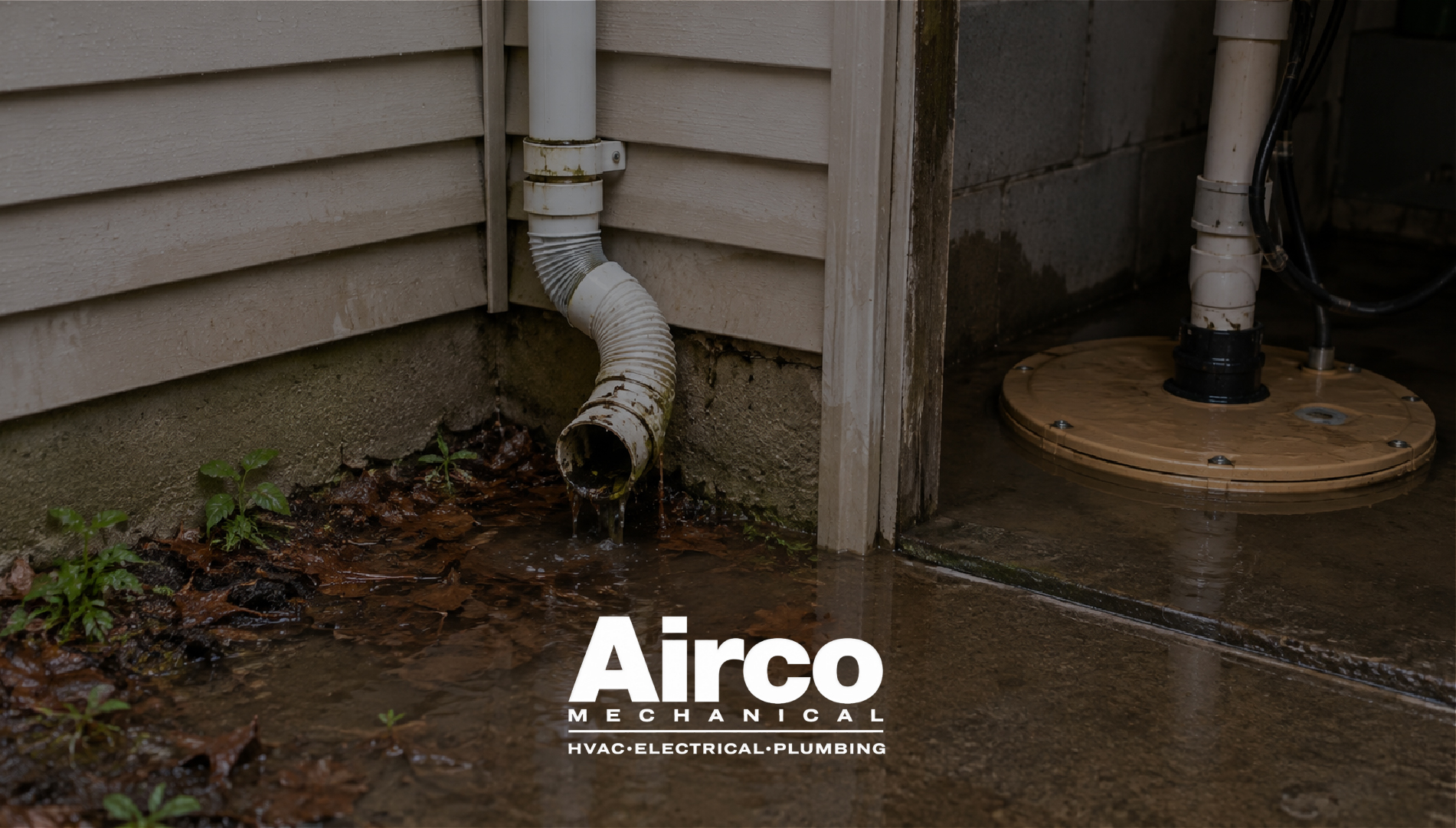
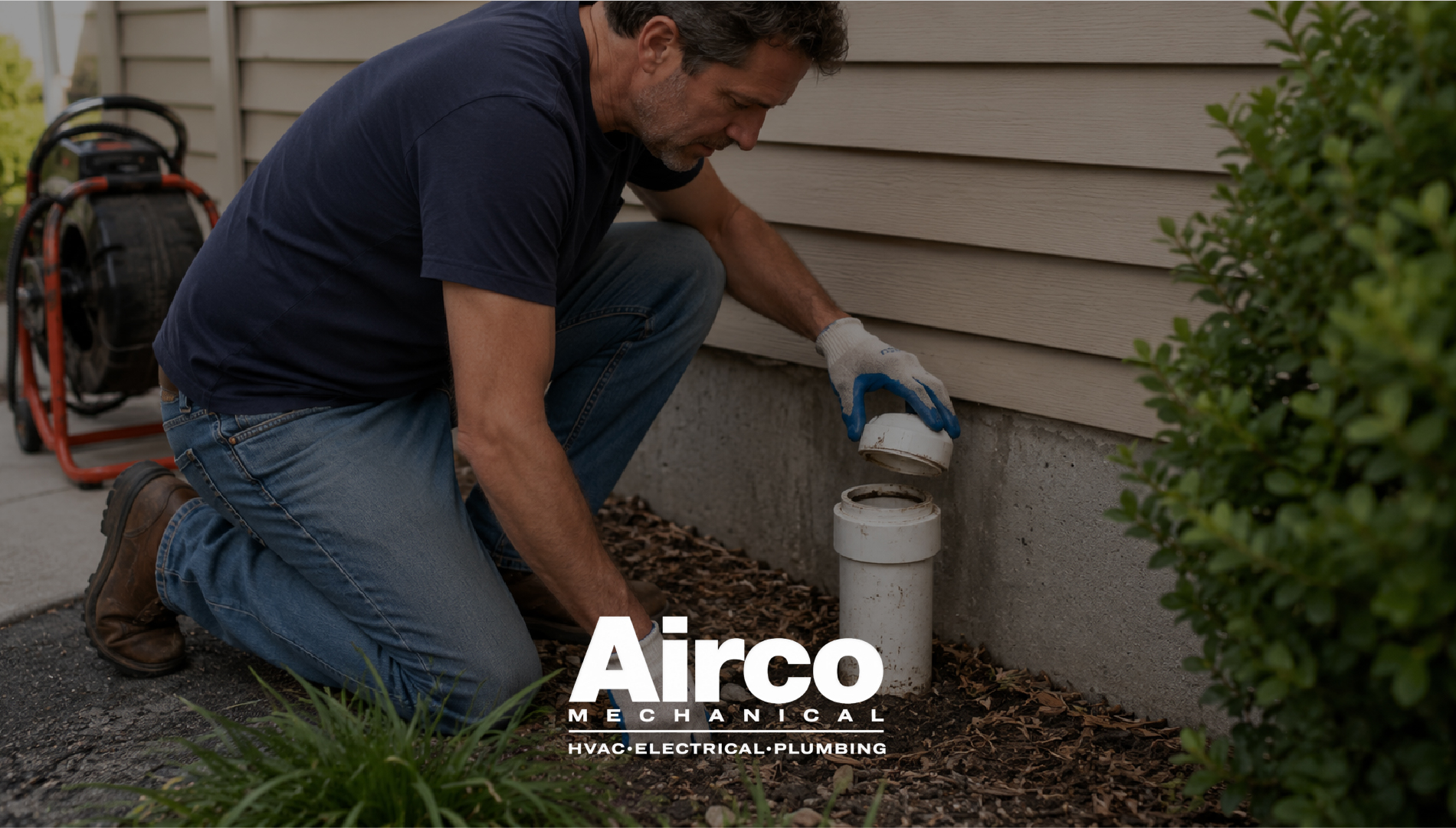
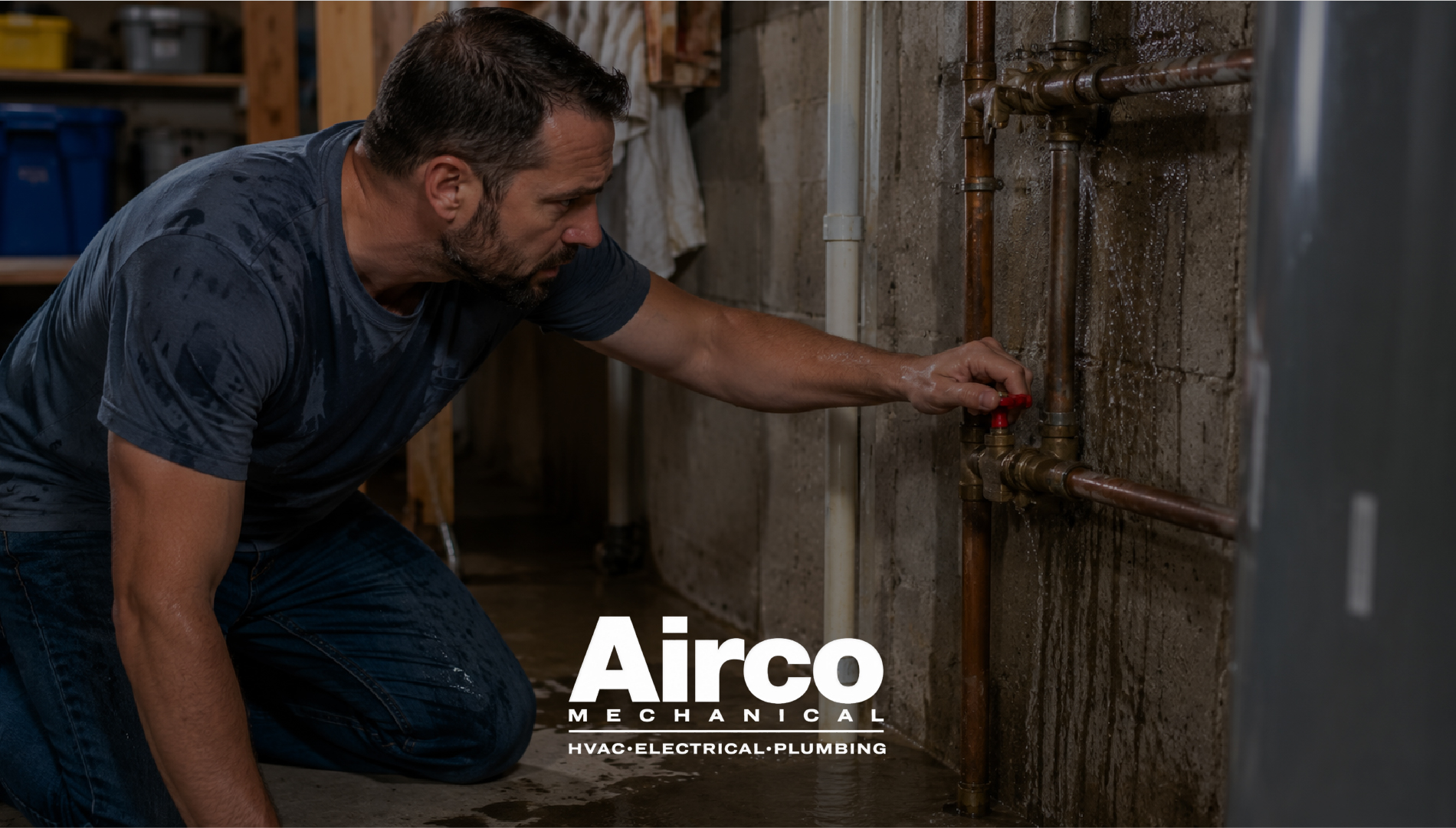
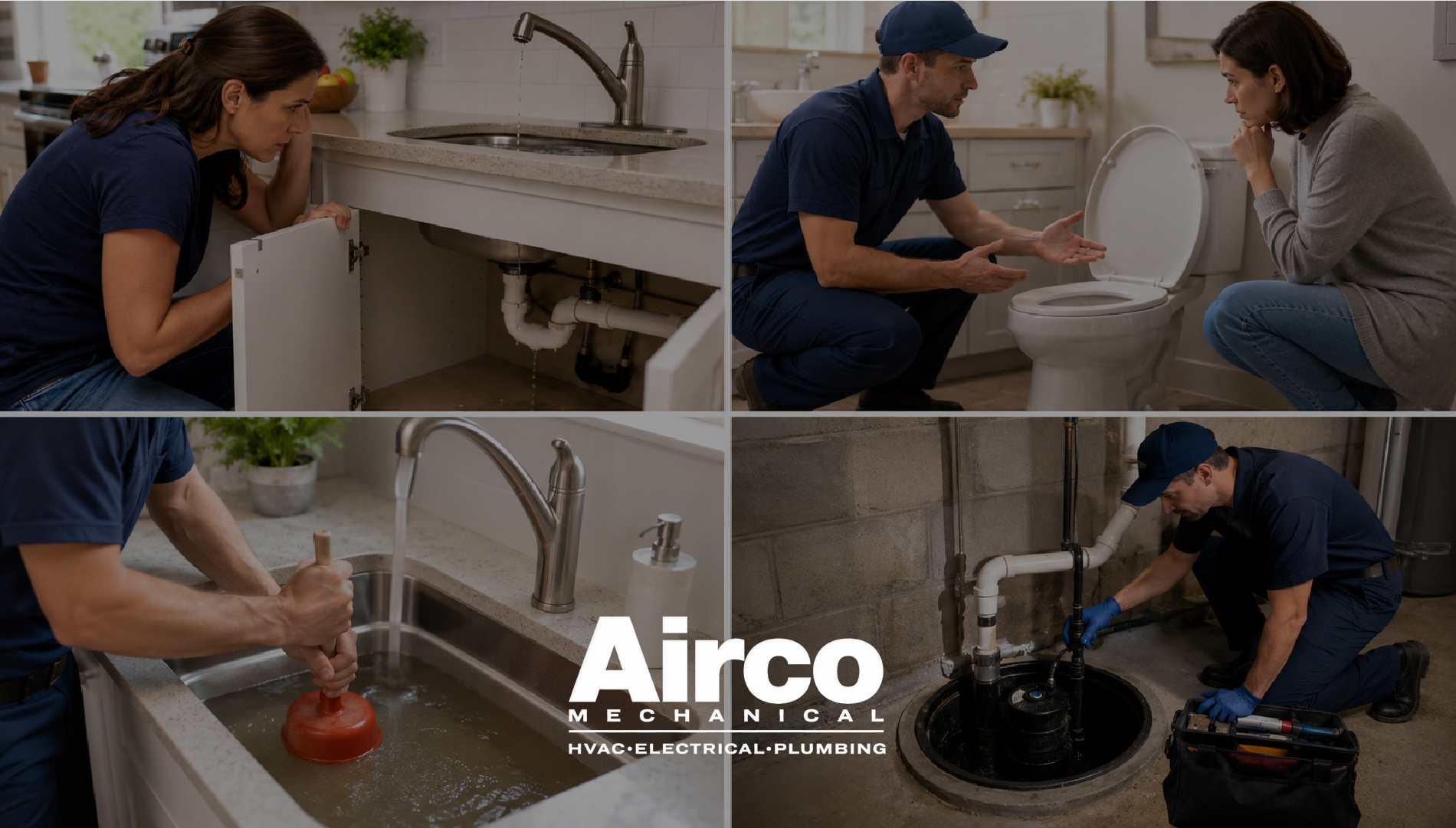
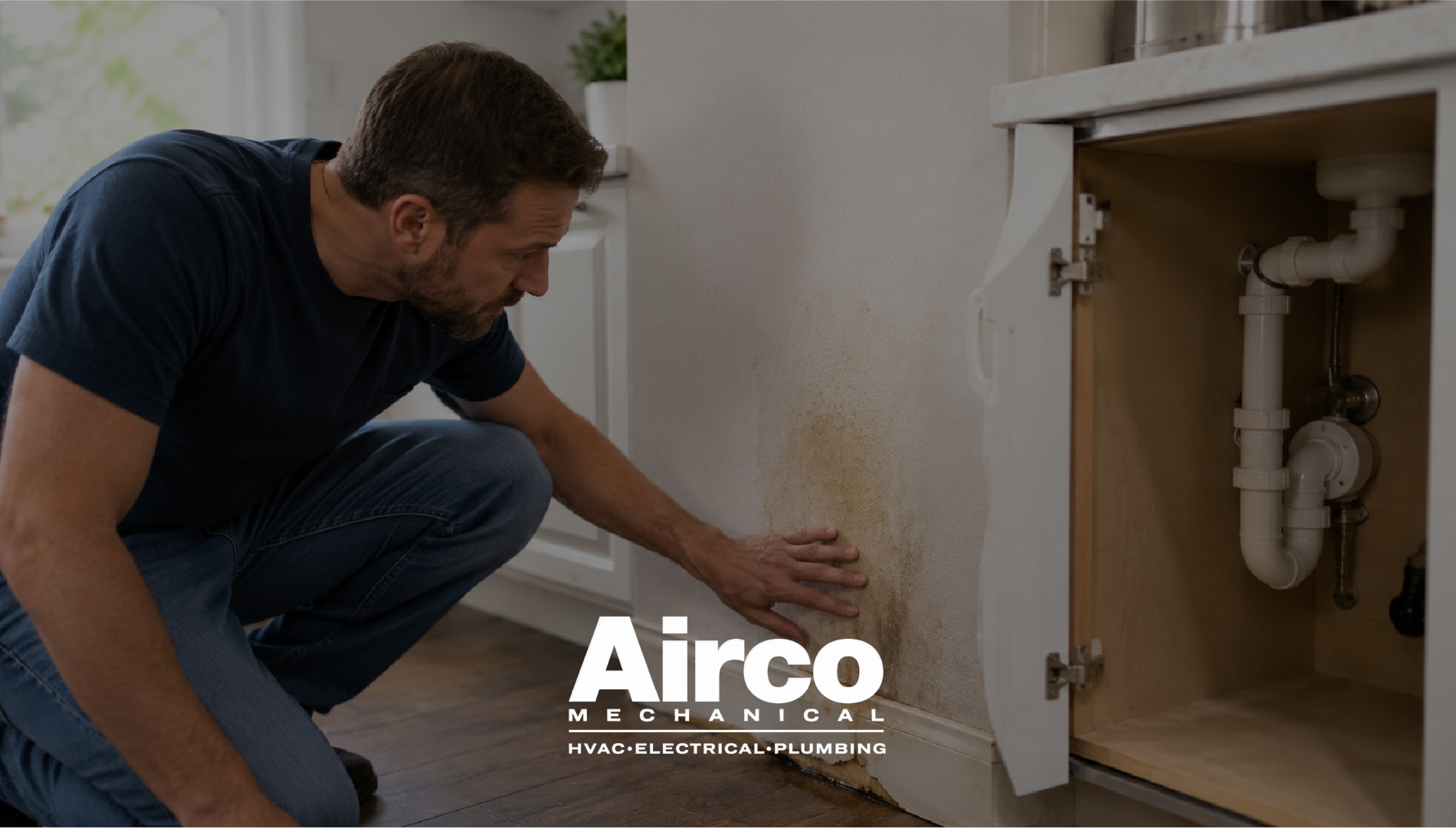
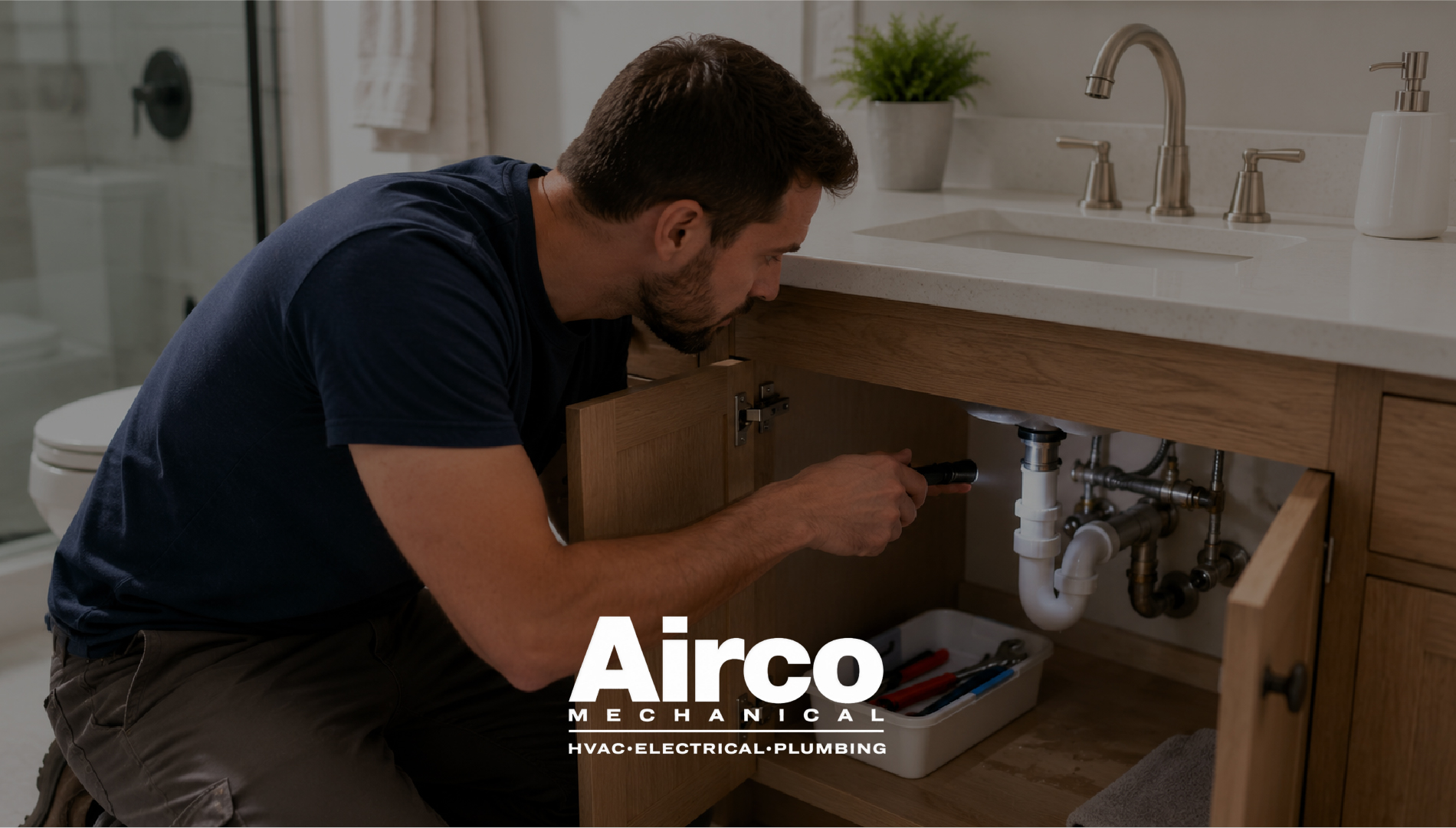
A home plumbing shut-off valve guide helps homeowners understand where shut-off valves are located, how they work, when to use them, and why they matter during leaks, fixture repairs, appliance problems, and plumbing emergencies. Shut-off valves can stop water before it damages cabinets, flooring, walls, ceilings, and personal property. They are especially important near kitchens, bathrooms, water heaters, washing machines, refrigerator water lines, and outdoor plumbing. Airco Mechanical provides professional support for kitchen plumbing, bathroom plumbing, drains and sewers, and sump pumps when plumbing valves, leaks, fixtures, or water-control problems need expert service.
A working shut-off valve gives homeowners control during emergencies. If a faucet leaks, a toilet overflows, a dishwasher line breaks, or a supply pipe drips beneath a sink, the correct valve can reduce damage before a plumber arrives. For complete residential plumbing support, homeowners can contact Airco Mechanical for inspection, repair, replacement, and maintenance.
The EPA WaterSense program notes that household leaks can waste nearly one trillion gallons of water nationwide each year, which makes leak control and fast shutoff access important for homeowners. Review the EPA’s Fix a Leak Week guidance for more information.
What Plumbing Shut-Off Valves Do
A shut-off valve controls water flow to a fixture, appliance, room, or the entire home. When the valve is closed, it stops or reduces water flow so repairs can be made safely.
Main Shut-Off Valve Types
| Valve Type | Common Location | Main Purpose |
|---|---|---|
| Main water shut-off valve | Near water meter, utility area, basement, garage, or exterior wall | Stops water to the entire home |
| Sink shut-off valve | Under kitchen or bathroom sink | Stops water to faucet |
| Toilet shut-off valve | Behind or beside toilet | Stops water to toilet tank |
| Dishwasher shut-off valve | Under sink or near appliance line | Stops water to dishwasher |
| Refrigerator water valve | Behind fridge or under sink | Stops water to ice maker or dispenser |
| Washing machine valves | Behind washer | Stop hot and cold water to washer |
| Water heater shut-off valve | Above or near water heater | Stops cold water entering heater |
| Outdoor faucet valve | Basement, crawl space, garage, or wall | Stops water to hose bibs |
A strong home plumbing shut-off valve guide should help homeowners identify each valve before an emergency happens.
Why Shut-Off Valves Matter
Shut-off valves are small parts, but they can prevent major water damage. A leaking supply line can release water quickly. A stuck toilet valve can make an overflow worse. A broken appliance hose can flood a room if water is not stopped.
Shut-Off Valves Help With
- Emergency leak control
- Fixture repair
- Faucet replacement
- Toilet repair
- Appliance installation
- Water heater service
- Outdoor faucet winter preparation
- Plumbing inspection
- Preventive maintenance
- Reducing water damage risk
A valve that does not work when needed can turn a small leak into a major repair.
Home Plumbing Shut-Off Valve Guide: Where to Find Valves
This home plumbing shut-off valve guide starts with location. Homeowners should know where the main valve and fixture valves are before a plumbing problem starts.
1. Main Water Shut-Off Valve
The main water shut-off valve controls water to the entire home. It is often located:
- Near the water meter
- In a garage
- In a basement
- In a utility room
- On an exterior wall
- In a crawl space
- Near the water heater
- In a meter box outside the home
2. Kitchen Sink Valves
Kitchen sink valves are usually inside the cabinet beneath the sink. One valve controls cold water and one controls hot water.
They may also connect to:
- Faucet
- Dishwasher
- Garbage disposal area
- Refrigerator line
- Water filtration system
3. Bathroom Sink Valves
Bathroom sink valves are beneath the vanity. They allow faucet repair without turning off water to the whole home.
4. Toilet Shut-Off Valve
The toilet valve is usually on the wall or floor behind the toilet. It controls water entering the toilet tank.
5. Appliance Valves
Appliance valves may be behind or near the appliance. These include dishwashers, washing machines, refrigerators, and water heaters.
Common Shut-Off Valve Problems
Shut-off valves can fail over time because of corrosion, mineral buildup, age, poor installation, or lack of use.
Warning Signs
- Valve will not turn
- Valve turns but water keeps flowing
- Valve leaks when touched
- Corrosion appears around the valve
- Handle is broken
- Valve drips from the stem
- Pipe moves when valve is turned
- Valve is hard to reach
- Valve is missing
- Valve is painted shut
If a valve is stuck, forcing it can break the valve or pipe. Call a plumber instead.
Shut-Off Valve Problems and Solutions
| Problem | Possible Cause | Best Action |
|---|---|---|
| Valve stuck open | Mineral buildup or corrosion | Professional valve replacement |
| Valve leaks at handle | Worn packing or seal | Repair or replacement |
| Valve does not stop water | Internal failure | Replace valve |
| Valve handle breaks | Age or poor material | Replace valve |
| No fixture valve installed | Older plumbing or poor setup | Install accessible valve |
| Valve is hard to reach | Poor placement | Relocation may be recommended |
| Pipe moves when turning valve | Loose support or weak pipe | Stop and call plumber |
How to Test Shut-Off Valves Safely
Homeowners can carefully test accessible valves, but should avoid forcing stuck valves.
Safe Testing Process
- Locate the valve.
- Clear the area around it.
- Turn the valve gently.
- Run the fixture to see if water stops.
- Turn the valve back on slowly.
- Check for drips.
- Note any valve that is stuck, leaking, or difficult to use.
If the valve leaks during testing, stop and schedule professional service.
Main Valve vs. Fixture Valve
| Feature | Main Water Valve | Fixture Valve |
|---|---|---|
| Controls | Entire home | One fixture or appliance |
| Best use | Major leak or emergency | Local fixture repair |
| Location | Meter, basement, garage, utility area | Near sink, toilet, appliance |
| Impact when closed | No water in home | Only one area affected |
| Maintenance importance | Critical | Very important |
| Professional replacement | Often needed | Often needed if stuck or leaking |
Both valve types should be accessible and working.
When to Replace Shut-Off Valves
A valve should be replaced if it is unreliable. Waiting until a leak happens is risky.
Replacement May Be Needed If
- The valve is corroded
- The valve does not fully close
- The handle is broken
- The valve leaks when touched
- The valve has not been used for years
- The valve is old and difficult to turn
- The valve is hidden behind storage
- The valve is attached to an old fixture being replaced
- The home has older plumbing materials
A plumber can replace old valves during faucet, toilet, appliance, or fixture service.
How Shut-Off Valves Connect to Kitchen Plumbing
Kitchen plumbing uses several water-control points. If a kitchen sink leaks or a dishwasher hose fails, a working valve can reduce damage.
Kitchen Areas to Check
- Hot faucet valve
- Cold faucet valve
- Dishwasher supply valve
- Refrigerator water-line valve
- Water filtration valve
- Garbage disposal drain connections
- Sink drain area
Professional kitchen plumbing service is recommended when valves leak, sink cabinets are wet, appliance lines drip, or supply lines are old.
How Shut-Off Valves Connect to Bathroom Plumbing
Bathrooms have multiple fixtures that depend on working valves.
Bathroom Areas to Check
- Toilet shut-off valve
- Sink hot and cold valves
- Shower access valve if available
- Tub plumbing access
- Supply lines under vanity
- Toilet supply line
Professional bathroom plumbing repair is important when valves are stuck, toilet water will not stop, or the vanity cabinet shows moisture.
Shut-Off Valves and Drain or Sewer Problems
Shut-off valves control clean water, not sewer backups. If wastewater backs up into a tub, shower, toilet, or floor drain, closing a fixture valve may not solve the problem.
For drainage problems, professional drains and sewers service may be needed.
Drain and Sewer Warning Signs
- Multiple slow drains
- Toilet gurgling
- Sewer odor
- Wastewater backup
- Water in basement floor drain
- Repeated clogs
Shut-Off Valves and Sump Pump Protection
A sump pump does not usually use a standard water shut-off valve, but water management still matters. If heavy rain causes basement water, a working pump and discharge system are critical.
Professional sump pump service can help with pump testing, discharge line issues, float switch problems, and backup protection.
Prevention: How to Maintain Shut-Off Valves
A home plumbing shut-off valve guide should include prevention because valves often fail from neglect.
Maintenance Tips
- Locate all valves before an emergency
- Label main and fixture valves
- Keep access clear
- Test valves gently
- Do not force stuck valves
- Replace corroded valves
- Check for leaks after testing
- Inspect appliance valves
- Replace aging supply lines
- Show family members where the main valve is
Shut-Off Valve Checklist
| Question | Yes / No |
|---|---|
| Do you know where the main water valve is? | |
| Is the main valve easy to reach? | |
| Are sink valves working? | |
| Does the toilet valve close fully? | |
| Are appliance valves accessible? | |
| Do any valves leak when touched? | |
| Are any valves corroded? | |
| Are valves labeled clearly? | |
| Do family members know how to shut off water? | |
| Has a plumber inspected old valves? |
Conclusion
A working shut-off valve can protect your home during leaks, fixture failures, appliance problems, and plumbing repairs. Homeowners should know where the main valve is, how fixture valves work, and when an old valve needs replacement.
Use this home plumbing shut-off valve guide to inspect your home before an emergency happens. If your valves are stuck, leaking, corroded, missing, or difficult to access, contact Airco Mechanical today for professional plumbing inspection, repair, and replacement.
FAQs
1. What is a plumbing shut-off valve?
It is a valve that stops water flow to a fixture, appliance, room, or the entire home.
2. Where is the main water shut-off valve?
It may be near the water meter, garage, basement, utility room, crawl space, or exterior wall.
3. Should I test shut-off valves?
Yes, gently. If a valve is stuck or leaks, do not force it. Call a plumber.
4. Can shut-off valves fail?
Yes. They can corrode, seize, leak, or stop closing fully over time.
5. When should a shut-off valve be replaced?
Replace it when it leaks, sticks, breaks, corrodes, or fails to stop water completely.