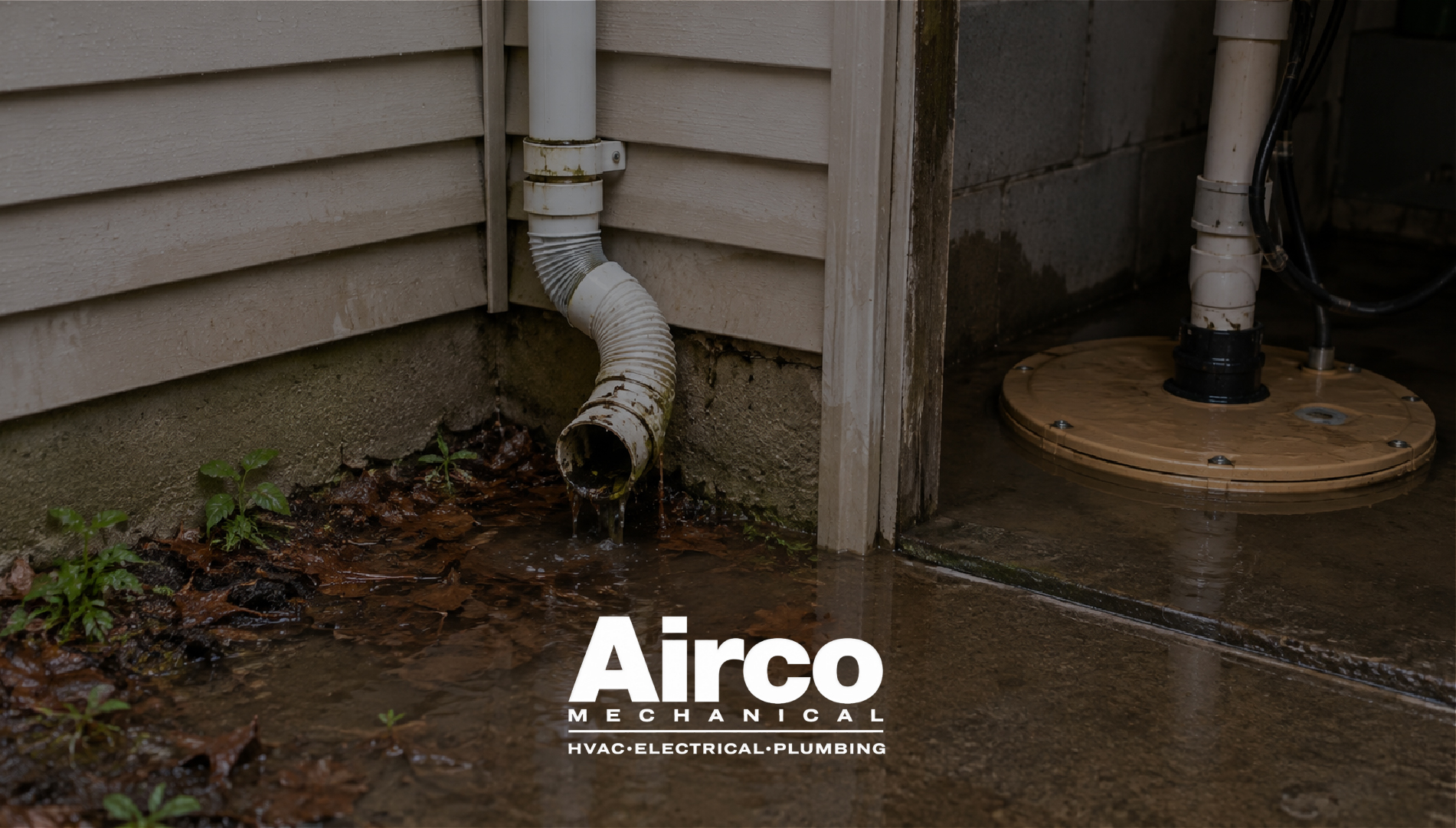
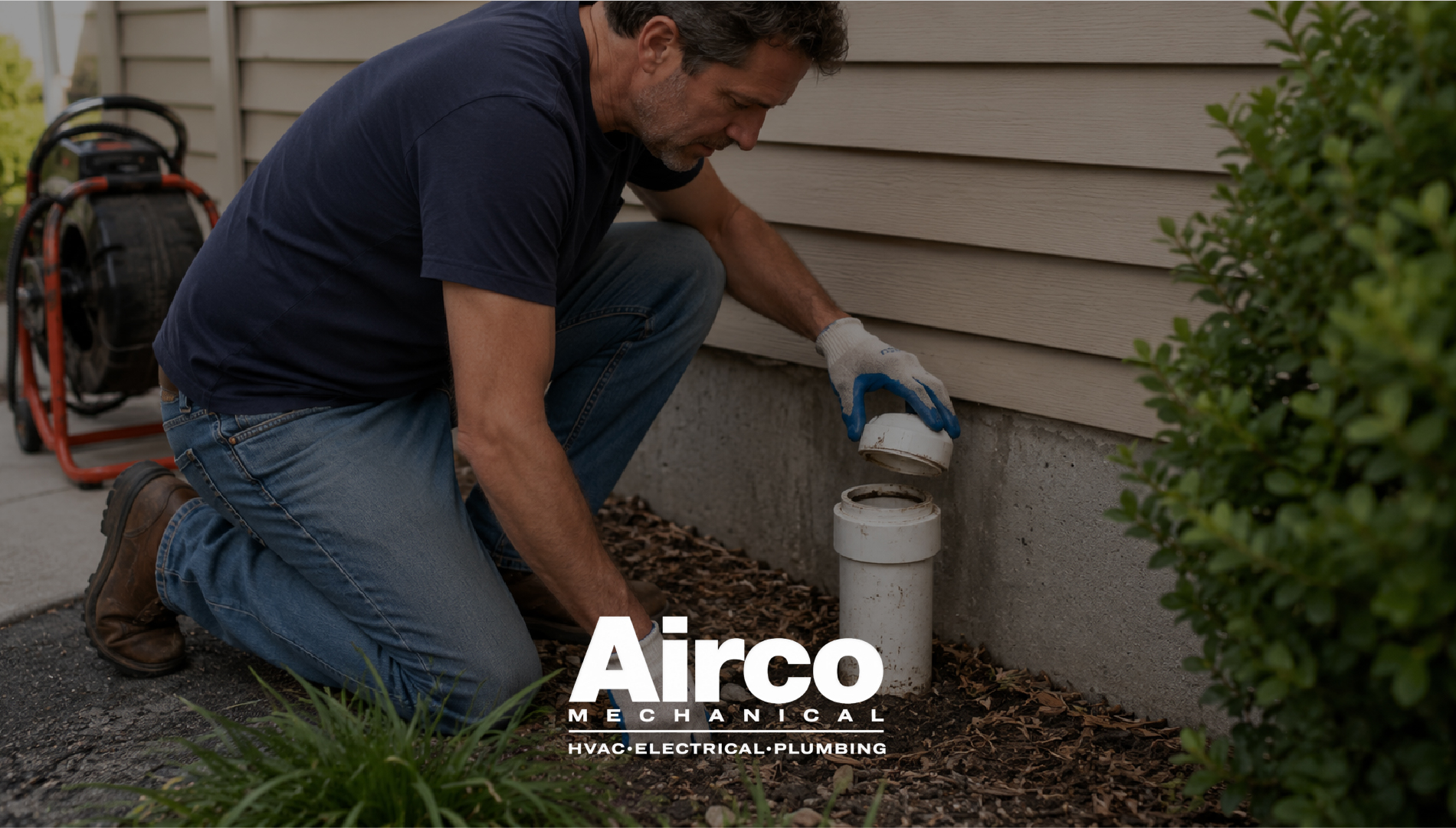
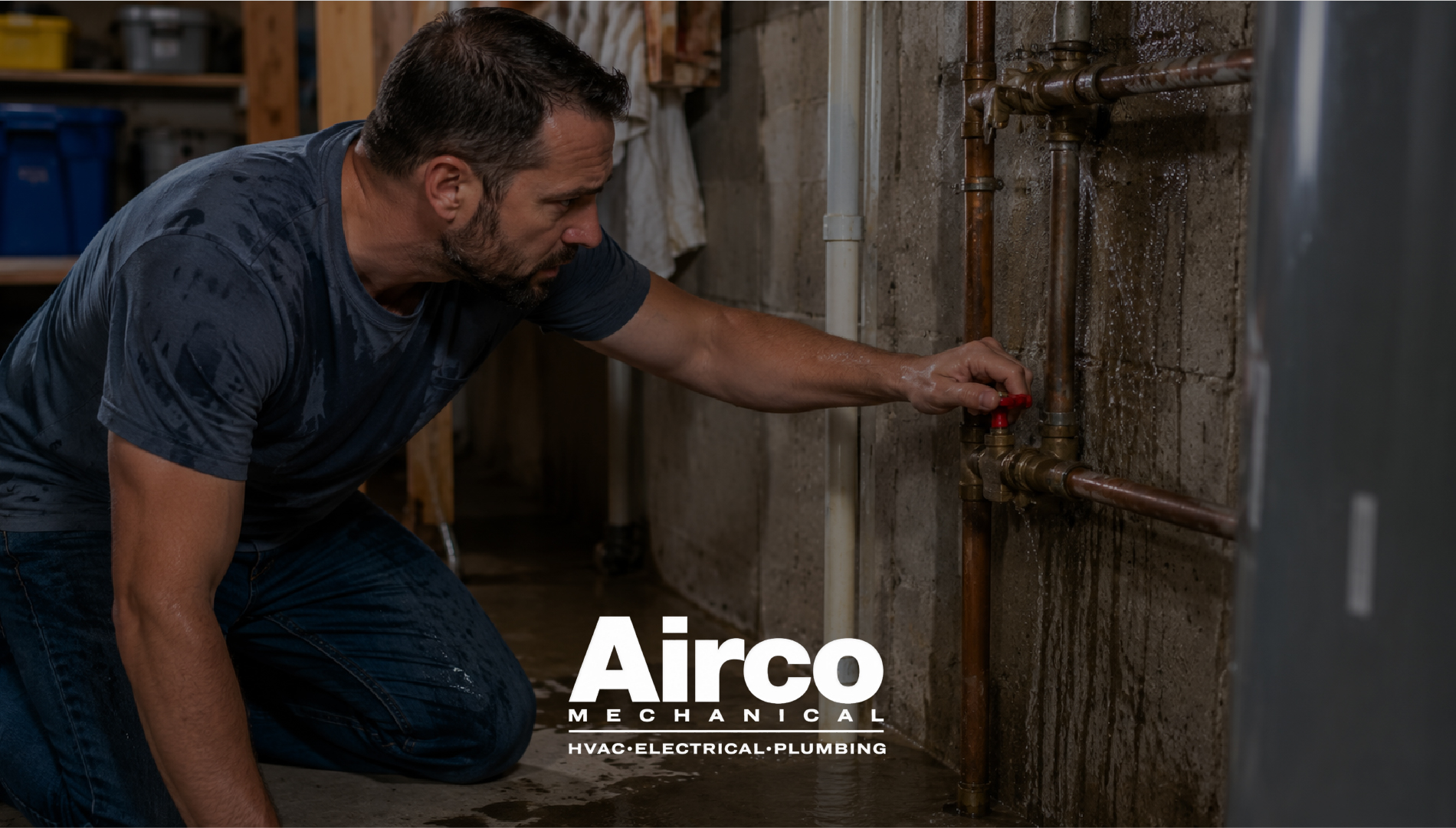
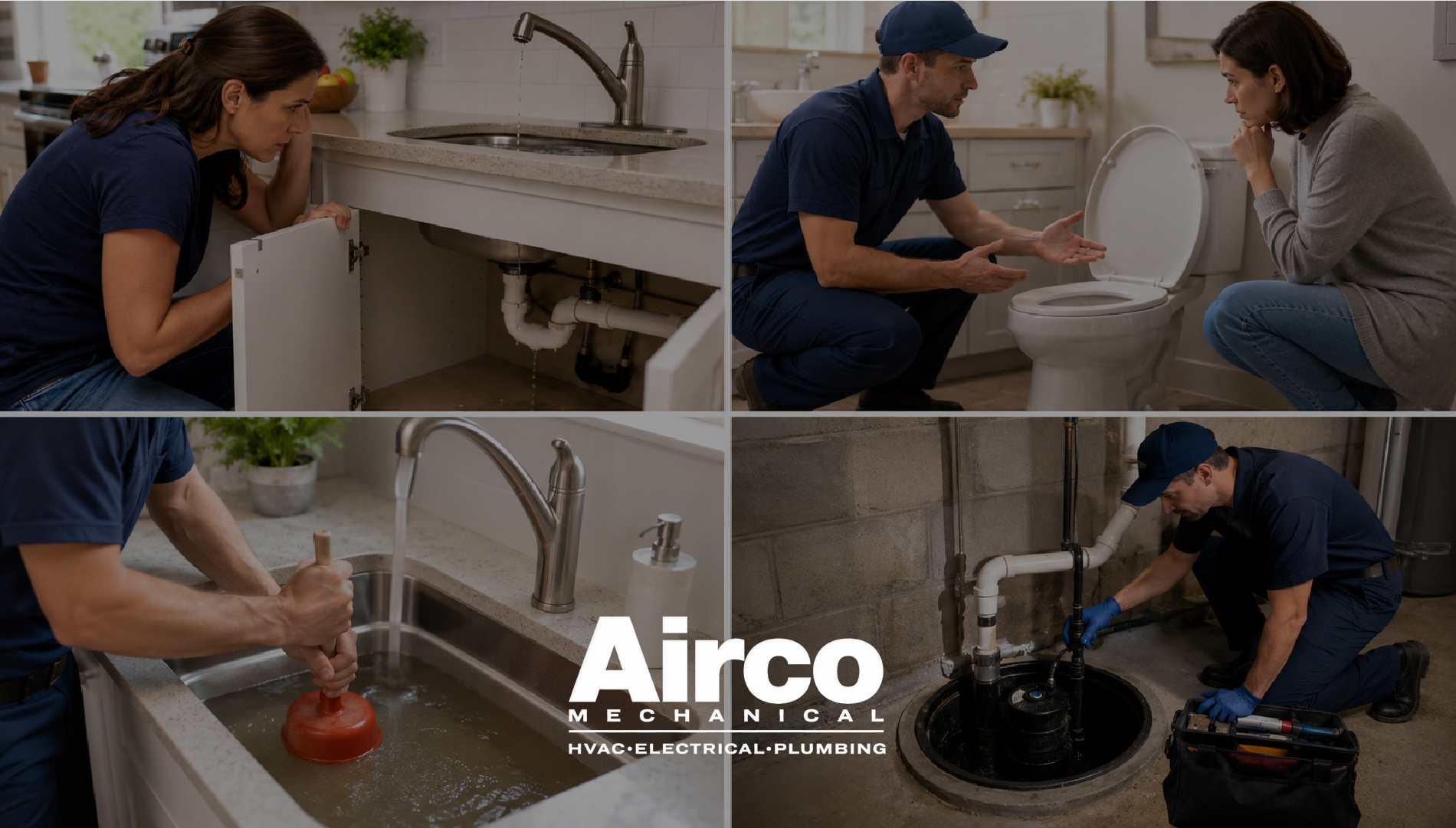
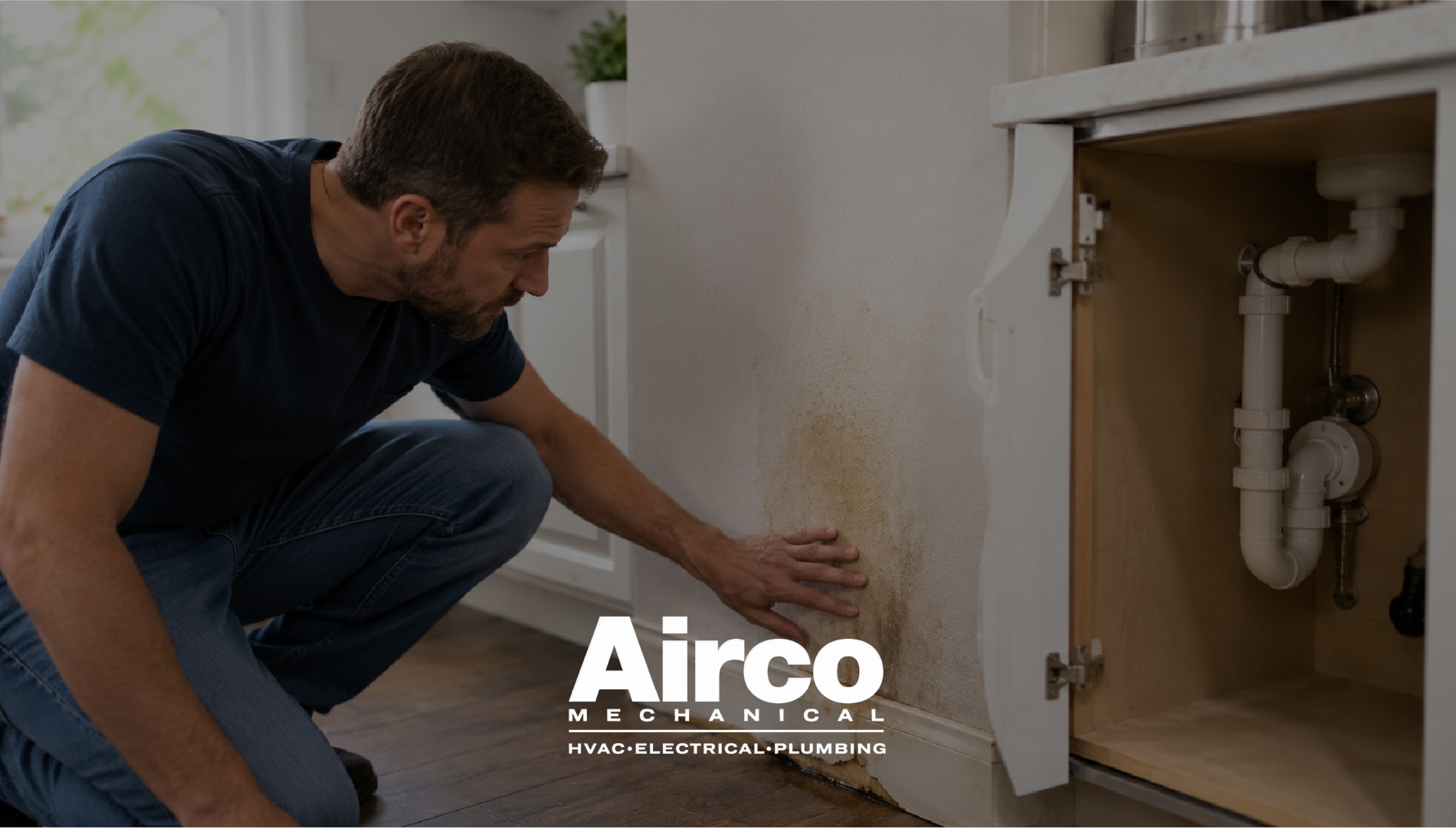
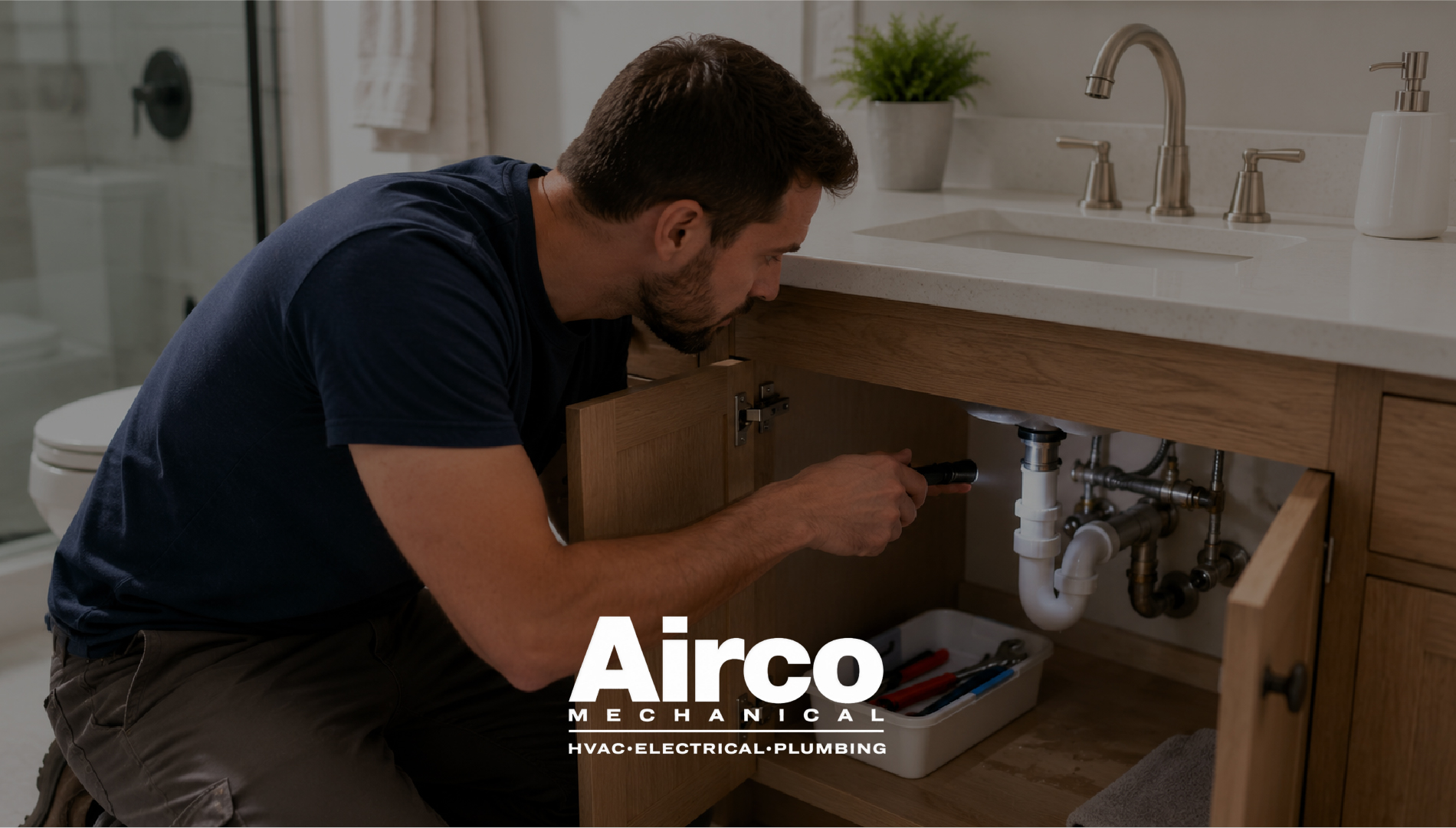
Sump pump discharge line problems happen when the pipe that carries pumped water away from the home becomes clogged, frozen, disconnected, poorly sloped, crushed, too short, or routed back toward the foundation. Even if the sump pump itself works, a bad discharge line can send water back into the basin, cause the pump to run constantly, overflow the sump pit, or allow basement and crawl-space moisture damage. Airco Mechanical provides professional sump pump service for installation, repair, replacement, maintenance, and discharge-related issues.
A sump pump system has two main jobs: collect water in the sump basin and move that water away from the home. The discharge line is the path that carries water outside. If the line fails, water may return to the foundation or never leave the pump area correctly. For complete residential plumbing support, homeowners can contact Airco Mechanical for drains and sewers, kitchen plumbing, and bathroom plumbing support when water or drainage problems are connected.
Ready.gov recommends considering a sump pump with a battery when preparing for flood risks. Review its flood preparedness guidance for broader home protection planning.
What a Sump Pump Discharge Line Does
A sump pump discharge line carries water from the pump to a safe outdoor discharge point. It should move water far enough away from the foundation so the same water does not drain back into the sump basin.
Main Parts of the Discharge Path
| Component | Role | Common Problem |
|---|---|---|
| Pump outlet | Pushes water into pipe | Loose connection |
| Check valve | Reduces water flowing backward | Failure or wrong installation |
| Interior discharge pipe | Carries water upward/outward | Leak or poor support |
| Exterior discharge pipe | Carries water away from home | Freezing, clogging, crushing |
| Discharge end point | Releases water safely | Too close to foundation |
| Pipe slope | Helps water move away | Backflow or standing water |
| Pipe cover/protection | Protects from debris and damage | Missing or damaged |
A sump pump can only protect the home if the discharge path works properly.
Sump Pump Discharge Line Problems: Warning Signs
This section of the blog includes the focus keyword clearly because homeowners often notice symptoms before they know the cause.
Common Warning Signs
- Sump pump runs constantly
- Water returns into the basin after pumping
- Basin fills too quickly
- Discharge pipe leaks
- Water pools near the foundation
- Pump sounds strained
- Pump cycles on and off rapidly
- Exterior pipe is frozen
- Pipe is clogged with debris
- Yard area near discharge is always wet
- Basement smells damp
- Backup battery alarm activates
If these symptoms appear, the pump may not be the only problem. The discharge line should be inspected.
1. Clogged Discharge Line
A discharge line can clog with dirt, leaves, ice, mud, small animals, lawn debris, or mineral buildup.
Signs of a Clog
- Pump runs but little water exits
- Water backs up into basin
- Pump cycles repeatedly
- Discharge point has no flow
- Basin overflows during rain
Best Prevention
- Keep the discharge opening clear
- Install a suitable outlet cover if needed
- Inspect after storms
- Keep leaves and mud away
- Avoid crushing the line with landscaping
- Schedule sump pump maintenance before heavy rain seasons
2. Frozen Discharge Line
In cold weather, standing water inside the line can freeze and block flow. When the pump cannot discharge water, the basin can overflow.
Causes
- Poor pipe slope
- Water trapped in low spots
- Discharge pipe exposed to freezing temperatures
- Long exterior pipe run
- Small-diameter pipe restriction
- No air gap or freeze protection where needed
Prevention
- Maintain proper slope
- Keep pipe clear
- Avoid low spots
- Use freeze-resistant discharge planning
- Inspect before winter
- Make sure water exits away from the home
3. Discharge Line Too Close to Foundation
If water exits too close to the house, it can flow back toward the foundation and re-enter the sump system.
Warning Signs
| Symptom | Possible Meaning |
|---|---|
| Pump runs after every rain for long periods | Water may be recycling |
| Soil near foundation stays wet | Discharge may be too close |
| Basement remains damp | Water may return toward house |
| Yard near pipe is saturated | Poor discharge location |
| Pump cycles repeatedly | Backflow or poor drainage |
The discharge outlet should send water away from the foundation and toward a safe drainage area.
4. Broken or Disconnected Pipe
A discharge pipe can separate because of vibration, age, poor installation, ground movement, lawn equipment, or freezing.
Signs
- Water leaks near pipe joints
- Pump runs loudly
- Water appears near basement wall
- Pipe moves during operation
- Exterior pipe is visibly cracked
- Water sprays from connection
A disconnected line can allow water to leak inside or near the foundation.
5. Failed Check Valve
A check valve helps prevent pumped water from flowing back into the basin after the pump shuts off. If it fails, the same water can return and force the pump to run repeatedly.
Signs of Check Valve Problems
- Water rushes back after pump stops
- Pump short cycles
- Loud banging sound
- Basin refills quickly
- Pump wears out faster
A failed check valve should be replaced by a professional.
6. Poor Pipe Slope
The discharge line should allow water to move away without standing in low areas.
Poor Slope Problems
- Water remains in pipe
- Freezing risk increases
- Pump works harder
- Water flows backward
- Exterior line clogs more easily
Proper slope is especially important for outdoor discharge sections.
7. Crushed or Blocked Exterior Line
Exterior discharge pipes can be damaged by:
- Lawn equipment
- Soil movement
- Foot traffic
- Vehicles
- Landscaping
- Tree roots
- Ice
- Yard debris
If the exterior pipe is blocked or crushed, water cannot exit correctly.
8. No Backup Protection
Discharge problems often happen during storms, which are also times when power can fail. If the sump system has no backup, the risk increases.
Backup Options
- Battery backup sump pump
- Water alarm
- Secondary pump
- Generator support
- Smart monitoring device
- Regular testing schedule
A backup system does not replace discharge maintenance, but it adds protection.
Sump Pump vs. Discharge Line Problem
| Symptom | Pump Problem Possible | Discharge Line Problem Possible |
|---|---|---|
| Pump will not turn on | Yes | No |
| Pump runs but water returns | Possible | Yes |
| Water pools outside near pipe | No | Yes |
| Pump cycles rapidly | Yes | Yes |
| Loud motor noise | Yes | Possible strain |
| No water exits outside | Possible | Yes |
| Basin overflows | Yes | Yes |
| Pipe is frozen | No | Yes |
A plumber can determine whether the issue is the pump, float switch, check valve, discharge pipe, or drainage route.
Inspection Process for Discharge Line Problems
Step 1: Test the Pump
Water is added to the basin to see if the pump activates.
Step 2: Check Water Movement
The technician confirms whether water exits the discharge point.
Step 3: Inspect the Check Valve
The valve is checked for backflow, noise, and proper direction.
Step 4: Inspect Interior Pipe
Leaks, loose fittings, and support issues are reviewed.
Step 5: Inspect Exterior Pipe
The discharge route is checked for freezing, blockage, crushing, or poor slope.
Step 6: Evaluate Discharge Location
The technician confirms whether water is being moved away from the foundation.
Step 7: Recommend Repair
The solution may include clearing, rerouting, replacing pipe, adding a check valve, or upgrading the system.
Prevention: How to Avoid Sump Pump Discharge Line Problems
Preventing sump pump discharge line problems helps reduce basement water risk.
Prevention Checklist
- Test sump pump before heavy rain
- Keep discharge outlet clear
- Inspect exterior pipe regularly
- Check for freezing risk
- Make sure water flows away from foundation
- Replace damaged pipe sections
- Keep leaves and mud away
- Check the check valve
- Install a backup system
- Keep the basin clean
- Schedule maintenance if pump cycles often
Discharge Line Checklist
| Question | Yes / No |
|---|---|
| Does water exit the discharge line during testing? | |
| Is the pipe free from debris? | |
| Is the outlet away from the foundation? | |
| Is the check valve working? | |
| Does water return to the basin? | |
| Is the exterior pipe cracked or crushed? | |
| Is the pipe protected from freezing? | |
| Does the pump run too often? | |
| Is a battery backup installed? | |
| Has the system been inspected before storm season? |
Conclusion
A sump pump is only effective if the discharge line moves water away from the home correctly. Clogs, freezing, poor slope, broken pipe sections, failed check valves, and poor discharge location can all cause water to return, overflow, or damage the property.
If you notice sump pump discharge line problems, contact Airco Mechanical today. Airco Mechanical can inspect your sump pump system, repair discharge issues, test performance, and help protect your home from water damage.
FAQs
1. What is a sump pump discharge line?
It is the pipe that carries water from the sump pump to an outdoor discharge area.
2. Why does water return to my sump pit?
A failed check valve, poor slope, or blocked discharge line may be allowing water to flow back.
3. Can a discharge line freeze?
Yes. Standing water, poor slope, and exposed pipe sections can freeze in cold weather.
4. How far should water discharge from the house?
Water should discharge far enough away that it does not flow back toward the foundation.
5. When should I call a plumber?
Call if the pump runs constantly, water returns, the pipe leaks, the line freezes, or the basin overflows.