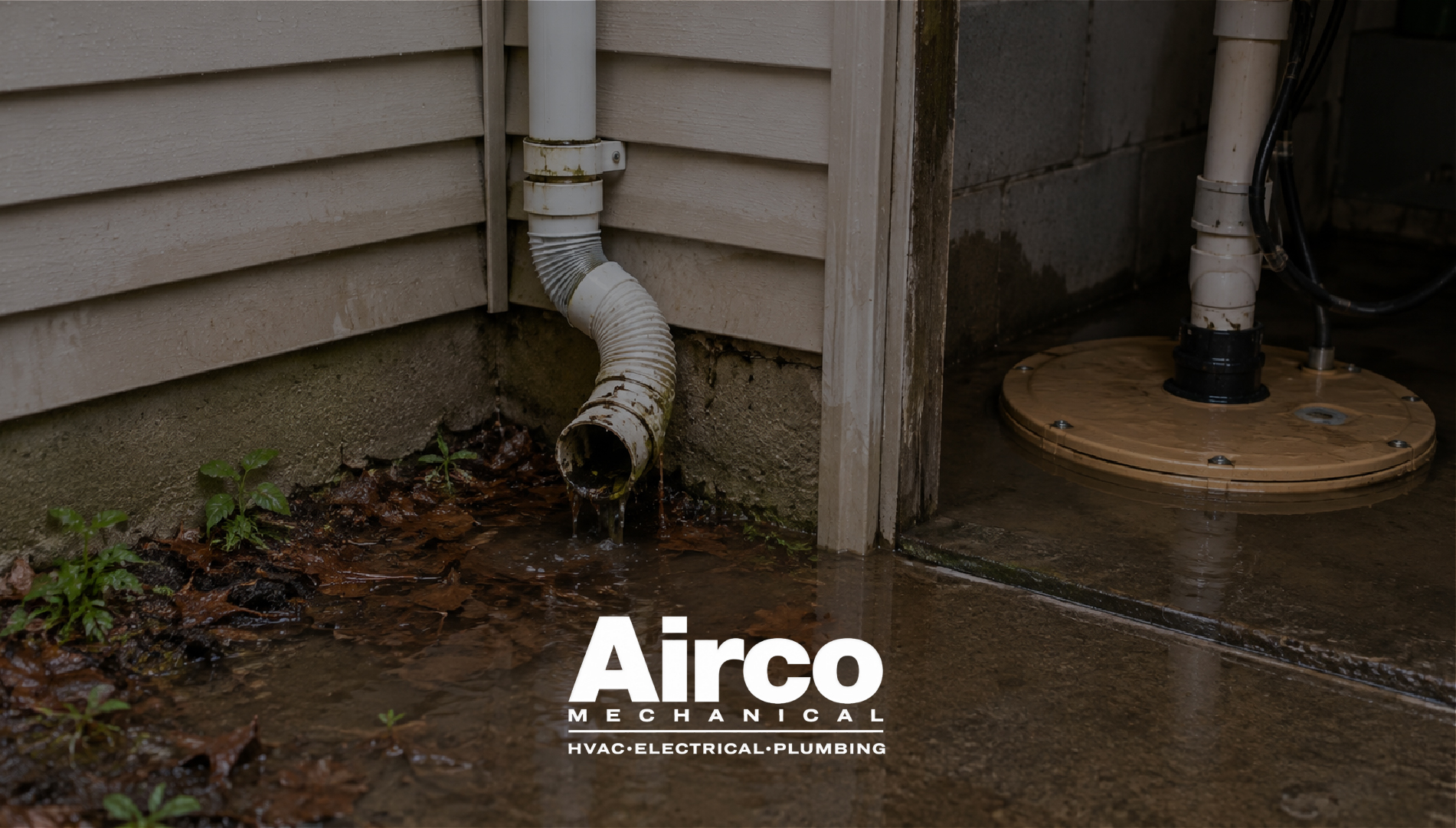
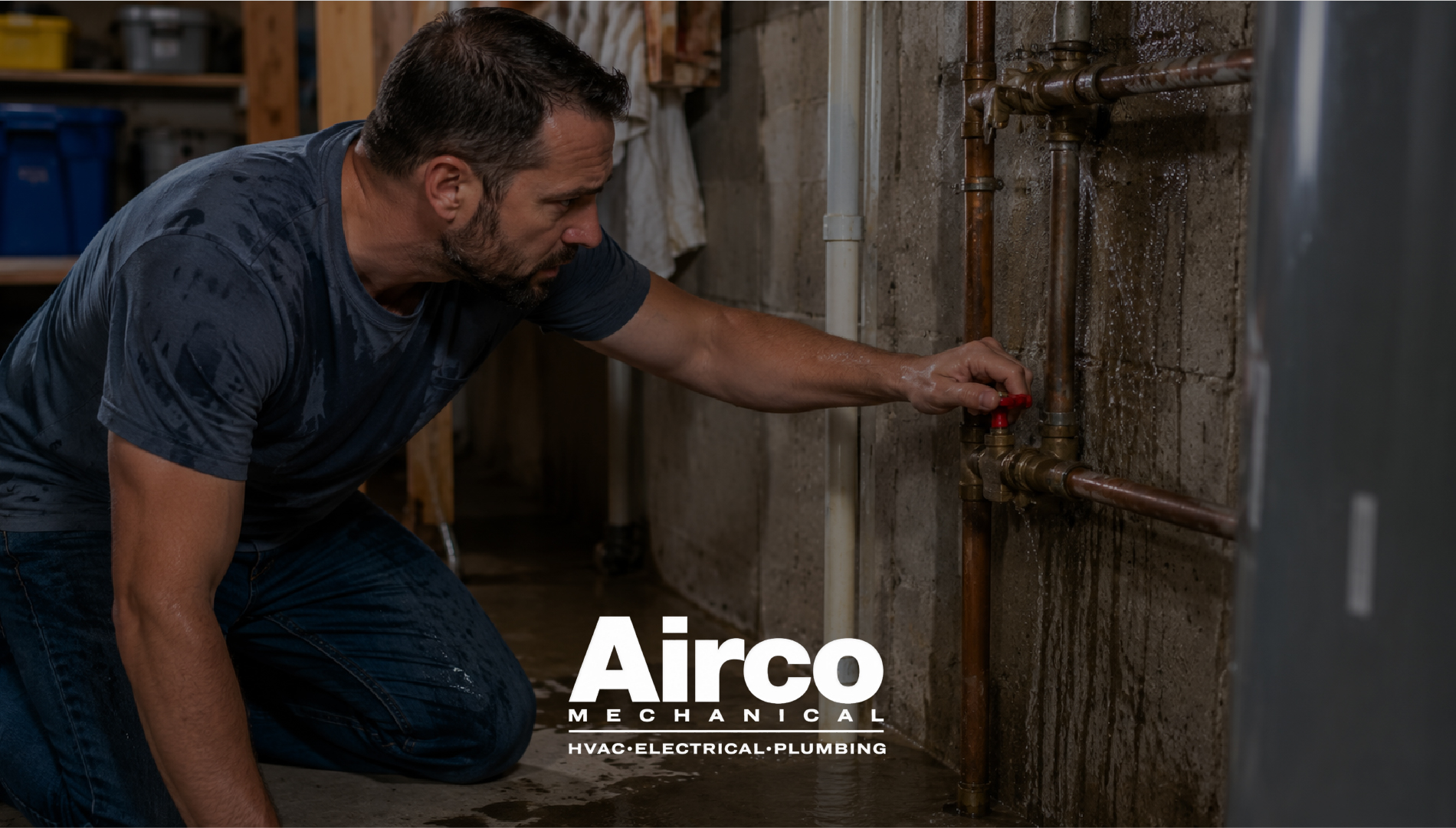
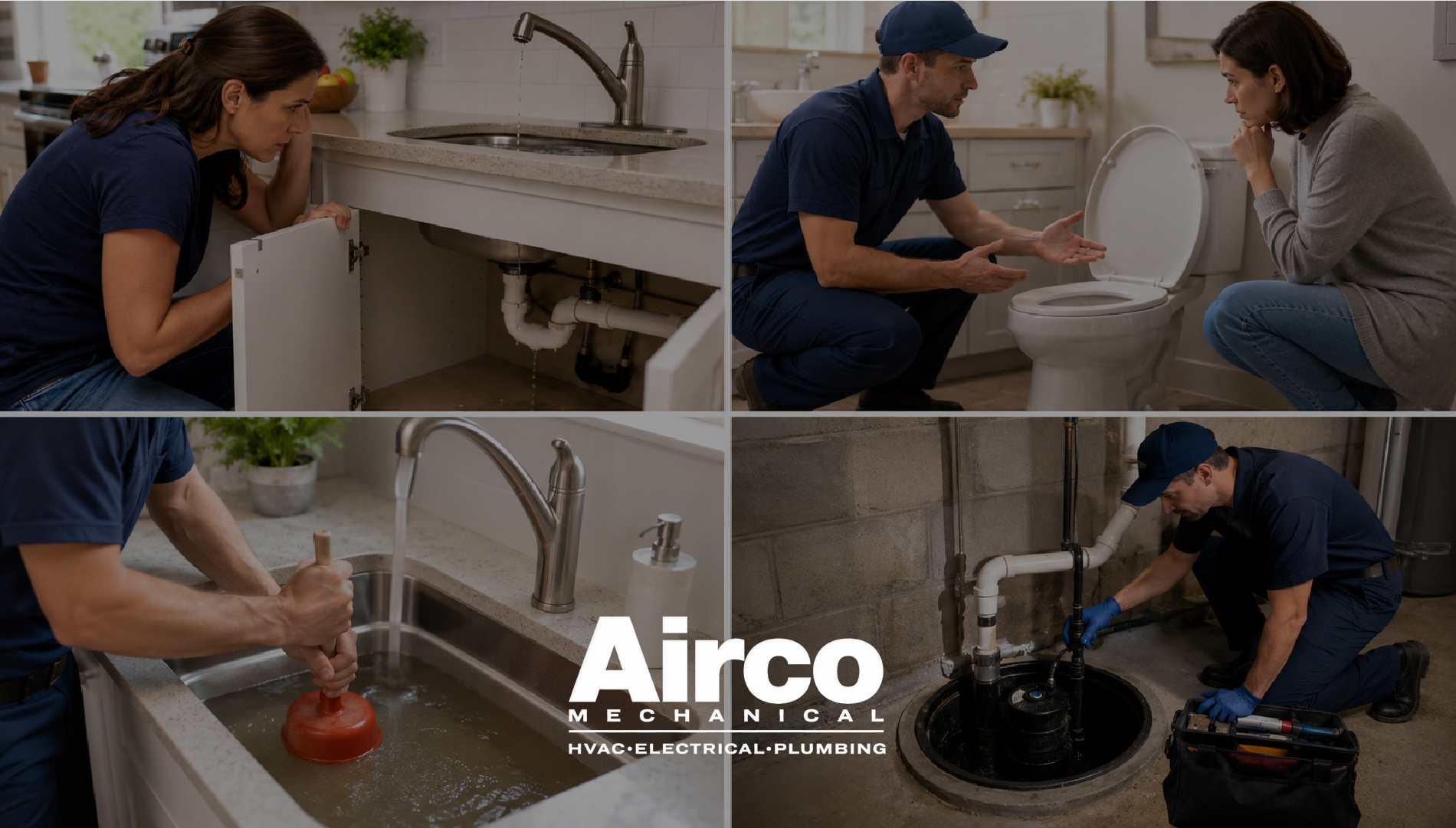
A sewer cleanout guide helps homeowners understand what a cleanout is, where it may be located, why it matters during drain clogs or sewer backups, and how it allows plumbers to access the main sewer line more safely and efficiently. A sewer cleanout can save time during drain service, reduce unnecessary disruption, and help diagnose problems such as recurring clogs, root intrusion, grease buildup, sewer odors, and wastewater backups. Airco Mechanical provides professional drains and sewers service for cleaning, inspection, repair, replacement, and maintenance.
A sewer cleanout is not the same as a drain. It is an access point that allows a plumber to reach the drainage or sewer line with cleaning and inspection equipment. Homeowners who know where their cleanout is can respond faster when wastewater backs up or drains stop working. For broader plumbing support, Airco Mechanical also helps with kitchen plumbing, bathroom plumbing, and sump pump service when related systems are affected.
Austin Water explains that blockages can cause wastewater to back up through drains, cleanouts, and manholes when sewer flow is restricted. Review its sanitary sewer overflow guidance for sewer backup prevention information.
What Is a Sewer Cleanout?
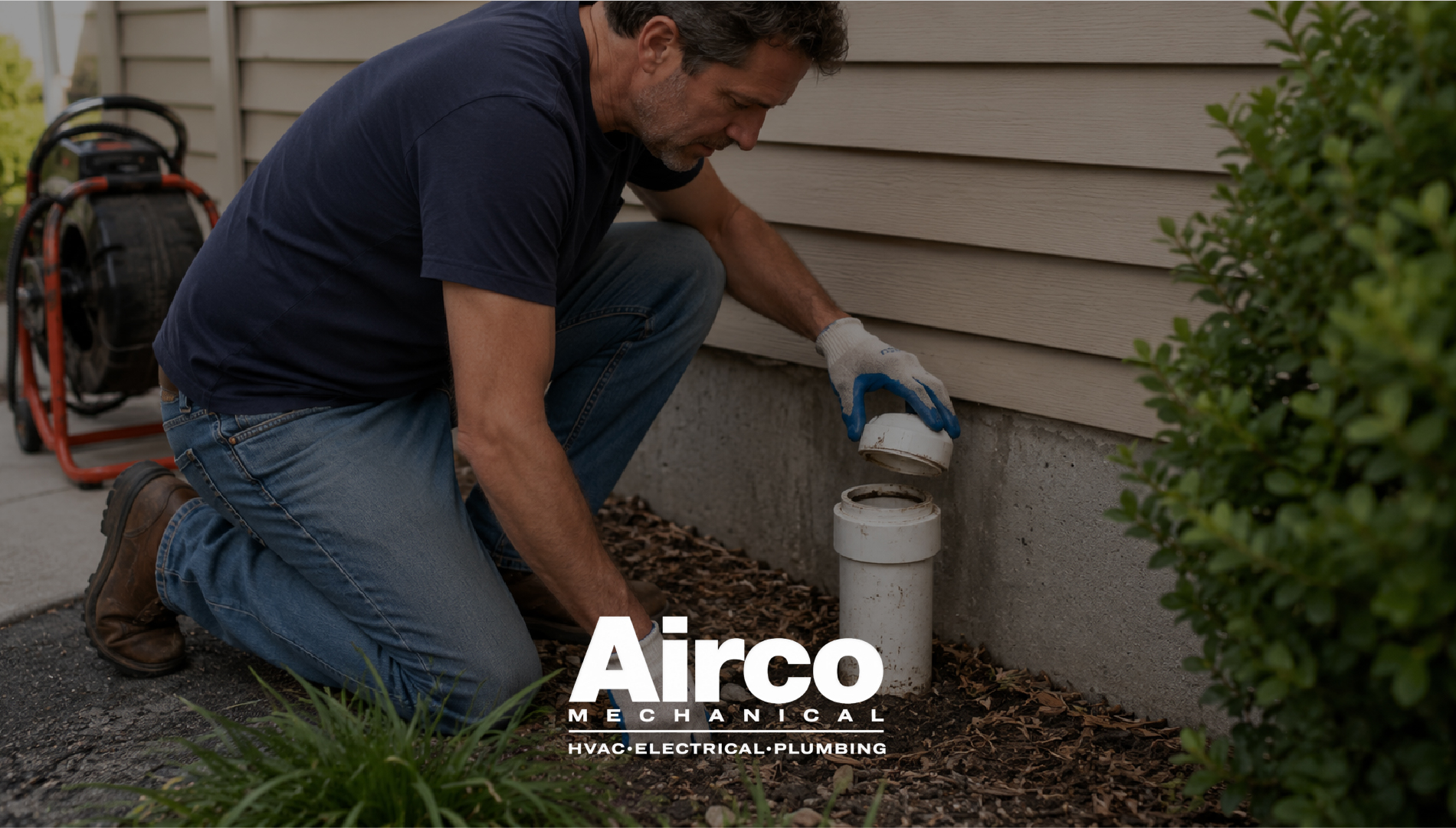
A sewer cleanout is a capped pipe opening connected to the home’s drainage or sewer system. It gives plumbers access to the sewer line without removing toilets, cutting pipes, or opening interior walls.
Main Functions
- Provides access for drain cleaning
- Helps inspect sewer lines
- Supports camera inspections
- Allows service equipment into the line
- Helps identify blockage location
- Reduces disruption during sewer service
- Improves emergency response
A cleanout is especially useful when multiple fixtures are backing up.
Sewer Cleanout Guide: Common Locations
This sewer cleanout guide starts with location because a cleanout is only helpful if you can find it.
Possible Cleanout Locations
| Location | What to Look For |
|---|---|
| Exterior wall | White or black capped pipe near foundation |
| Front yard | Ground-level cap near sewer line route |
| Side yard | Pipe cap near bathrooms or utility area |
| Basement | Capped pipe near main drain |
| Crawl space | Cleanout connected to main drain |
| Garage | Floor or wall cleanout |
| Utility room | Near plumbing wall or drain stack |
| Near bathrooms | Access point close to main drain path |
The cleanout may be covered by landscaping, soil, mulch, storage, or flooring. It should remain accessible.
Why Every Homeowner Should Know the Cleanout Location
A sewer backup is stressful. Knowing the cleanout location can help a plumber begin work faster.
Benefits
- Faster drain service
- Easier sewer access
- Less disruption inside the home
- Better camera inspection access
- Faster diagnosis of main-line clogs
- Reduced need to remove fixtures
- Improved emergency response
- Better maintenance planning
If you cannot find the cleanout, a plumber may be able to locate it.
Sewer Cleanout vs. Drain Opening
| Feature | Sewer Cleanout | Fixture Drain |
|---|---|---|
| Purpose | Service access | Removes wastewater from fixture |
| Location | Main line or branch line | Sink, tub, shower, floor drain |
| Used by | Plumber or drain technician | Everyday household use |
| Cap present | Yes | Usually no cap |
| Best for | Cleaning and inspection | Normal drainage |
| Homeowner use | Should not open during backup | Normal use |
Opening a cleanout during a backup can release wastewater. It should be handled carefully by professionals.
Signs You May Need Sewer Cleanout Access
A plumber may need cleanout access when the problem appears to involve the main sewer line.
Warning Signs
- Multiple drains are slow
- Toilet gurgles when sink drains
- Water backs up into tub or shower
- Sewer smell appears
- Basement floor drain overflows
- Clogs return after cleaning
- Wastewater appears outside
- Lowest fixture backs up first
- Main sewer line needs camera inspection
These symptoms can point to a blockage beyond one fixture.
Common Problems Found Through a Cleanout
A cleanout can help plumbers diagnose several sewer issues.
| Problem | How Cleanout Helps |
|---|---|
| Grease buildup | Allows cleaning equipment to access line |
| Tree roots | Allows cutting or camera inspection |
| Foreign object | Helps locate and remove obstruction |
| Pipe belly | Camera may reveal standing water |
| Offset joint | Camera may show shifted pipe |
| Broken pipe | Inspection can confirm damage |
| Sewer odor issue | Helps evaluate line condition |
| Recurring backup | Helps identify root cause |
A sewer cleanout guide is important because many sewer problems cannot be fully diagnosed from a sink or toilet alone.
How Plumbers Use a Sewer Cleanout
Step 1: Locate the Cleanout
The plumber finds the cleanout and checks access.
Step 2: Inspect Safety Conditions
The area is checked for wastewater, pressure, damage, or unsafe conditions.
Step 3: Open the Cap Carefully
The cap is removed only when it is safe to do so.
Step 4: Insert Cleaning or Inspection Equipment
The plumber may use a drain machine or camera.
Step 5: Identify Blockage Direction
The blockage may be toward the house or toward the municipal sewer connection.
Step 6: Clear or Inspect the Line
The line may be cleaned, inspected, or prepared for repair recommendations.
Step 7: Replace the Cap Securely
The cleanout cap is reinstalled to prevent odors, debris, and safety problems.
Indoor vs. Outdoor Cleanouts
| Cleanout Type | Advantage | Possible Limitation |
|---|---|---|
| Outdoor cleanout | Easier access during backups | May be buried or hidden |
| Indoor cleanout | Protected from weather | Backup risk inside home |
| Basement cleanout | Useful for main drain access | May release wastewater if opened |
| Yard cleanout | Good for sewer line access | May be damaged by landscaping |
| Crawl-space cleanout | Useful but hidden | Harder access |
Outdoor cleanouts are often easier during sewer emergencies, but any cleanout should remain reachable.
What If Your Home Does Not Have a Cleanout?
Some older homes may not have an accessible sewer cleanout, or it may be hidden. If no cleanout exists, plumbers may need to access the line through a toilet, roof vent, or another drain access point.
Why Adding a Cleanout May Help
- Easier future service
- Faster emergency response
- Better camera inspection access
- Less disruption inside home
- Improved maintenance
- Better sewer repair planning
A plumber can evaluate whether adding or improving cleanout access makes sense.
Sewer Cleanout Maintenance Tips
A cleanout does not need frequent homeowner maintenance, but it should stay accessible and protected.
Prevention Checklist
- Keep the cap visible
- Do not bury it under soil
- Avoid covering it with concrete
- Keep landscaping away
- Do not remove the cap casually
- Check for broken caps
- Keep the area clear for service
- Tell household members where it is
- Ask a plumber to inspect if it smells or leaks
If the cap is missing or damaged, sewer gas, insects, debris, or water can enter or escape.
Cleanout and Kitchen Plumbing
Kitchen drains can contribute to sewer-line issues when grease, food debris, and soap residue build up over time. If kitchen clogs become frequent or affect other fixtures, cleanout access may help inspect the line.
Professional kitchen plumbing service can address sink, disposal, dishwasher, and drain issues before they reach the main line.
Cleanout and Bathroom Plumbing
Bathroom drains and toilets are often connected to the same branch or main sewer line. If tubs, toilets, and sinks are all draining poorly, the problem may be beyond one fixture.
Professional bathroom plumbing service can help identify whether the issue is local or connected to the main line.
Cleanout and Sump Pump Systems
Sump pumps usually manage groundwater, not sewage. However, basement water issues, floor drains, and sewer backups may appear in the same lower-level areas. A plumber can determine whether the issue is a sump pump, floor drain, sewer line, or foundation drainage problem.
Professional sump pump service is recommended if water appears during heavy rain or the pump fails to discharge properly.
Prevention: How to Reduce Sewer Cleanout Emergencies
A good sewer cleanout guide should include prevention because the cleanout is mainly useful when something has gone wrong.
Prevent Main-Line Problems
- Keep grease out of drains
- Flush only toilet paper and waste
- Avoid flushing wipes
- Use drain strainers
- Schedule service for recurring clogs
- Watch for gurgling toilets
- Keep cleanout accessible
- Request camera inspection for repeated backups
- Avoid planting trees near sewer lines without planning
- Repair damaged sewer pipes early
Sewer Cleanout Checklist
| Question | Yes / No |
|---|---|
| Do you know where your sewer cleanout is? | |
| Is the cap visible and accessible? | |
| Is the cap damaged or missing? | |
| Are drains slow in multiple rooms? | |
| Do toilets gurgle? | |
| Has sewage ever backed up? | |
| Do clogs return after cleaning? | |
| Has a plumber inspected the sewer line? | |
| Is landscaping blocking the cleanout? | |
| Do family members know not to open it casually? |
Conclusion
A sewer cleanout is one of the most important access points in a home’s plumbing system. It helps plumbers clean, inspect, and diagnose sewer-line problems with less disruption. Homeowners should know where the cleanout is, keep it accessible, and call a plumber when multiple drains slow down, toilets gurgle, odors appear, or wastewater backs up.
Use this sewer cleanout guide to protect your home and prepare before a sewer emergency happens. Contact Airco Mechanical for professional drain and sewer inspection, cleaning, repair, and maintenance.
FAQs
1. What is a sewer cleanout?
It is a capped access point that allows plumbers to reach the home’s drain or sewer line.
2. Where is my sewer cleanout located?
It may be outside near the foundation, in the yard, basement, garage, crawl space, or utility room.
3. Should I open a sewer cleanout myself?
No, especially during a backup. Wastewater may escape when the cap is removed.
4. What if my home has no cleanout?
A plumber can inspect the system and may recommend adding one for easier future service.
5. Why does a cleanout matter?
It gives plumbers faster access for cleaning, camera inspection, and sewer-line diagnosis.