Choosing the right variable-speed vs single-stage heat pump in 2025 isn’t just about technology it’s about efficiency, comfort, and long-term value.
In today’s HVAC market, the two most common technologies are single-stage heat pump compressors vs variable-speed compressors. One is simple and affordable; the other is smart, adaptable, and energy-efficient but at a higher cost.
So, which one actually delivers better comfort and value? Let’s dive deep into the Variable-Speed vs Single-Stage heat pump efficiency face-off to uncover the truth behind the technology, costs, and long-term reliability.
Understanding Heat Pump Compressor Types
Every heat pump relies on a compressor, the engine that circulates refrigerant and drives the heating or cooling cycle.
- A single-stage heat pump compressor operates in a simple on/off mode; it’s either running at full power or not at all.
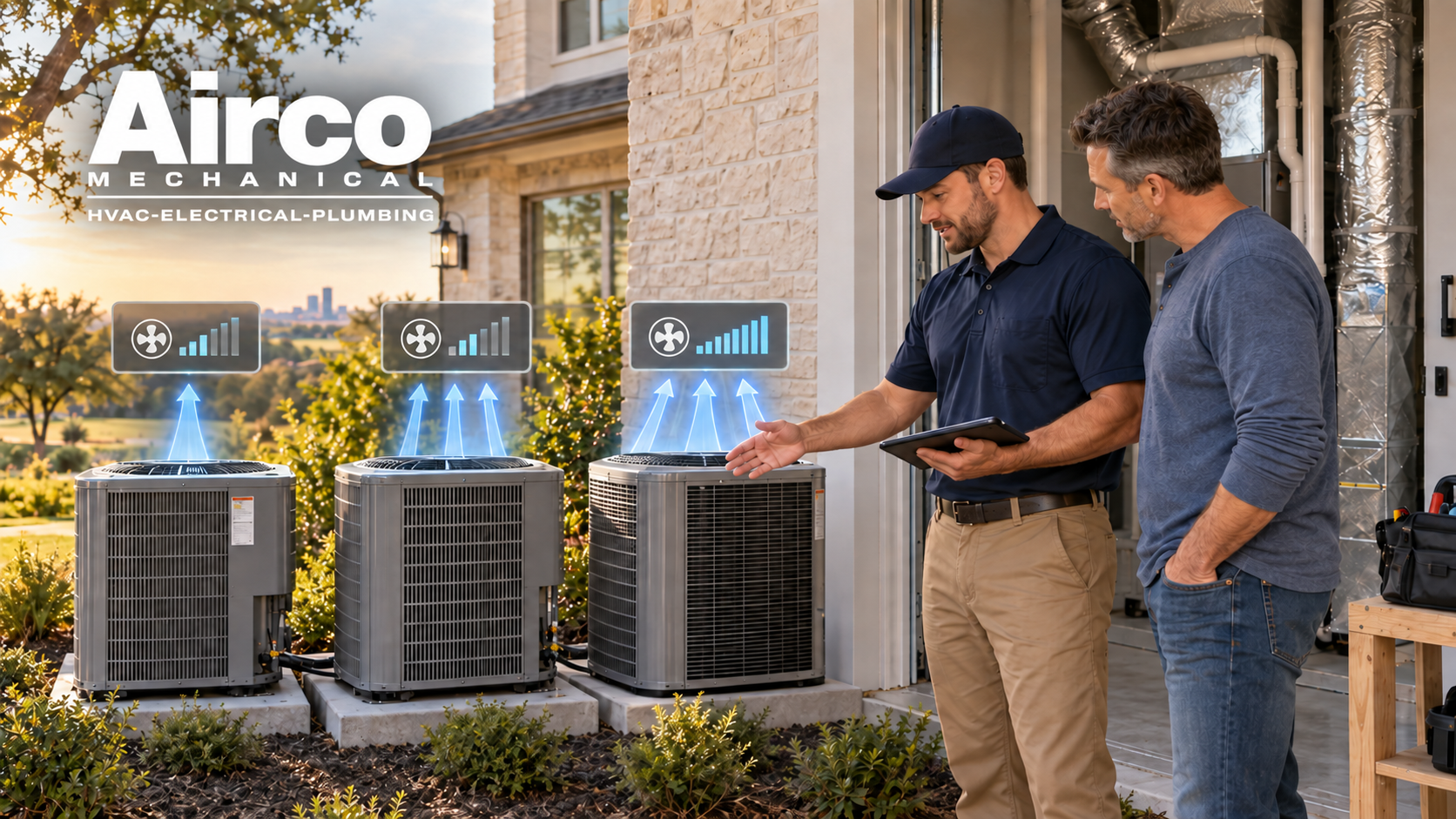
- A variable-speed (inverter-driven) compressor, on the other hand, can automatically adjust its output between 25% and 100%, based on your home’s temperature demand.
This difference might seem small, but it fundamentally changes how efficiently the system operates and how comfortable your home feels.
To fully understand the comparison, it’s helpful to first look at each type individually.
What Is a Single-Stage Heat Pump?
A single-stage heat pump is the most traditional and widely used compressor design. It runs at full capacity every time it kicks on, regardless of how much heating or cooling your home actually needs.
How It Works
When your thermostat detects the need for cooling or heating, the compressor turns on at full speed, and once the set temperature is reached, it shuts off completely. This constant start-stop cycle repeats throughout the day.
Advantages
- Lower upfront cost: Typically 25–40% cheaper than variable-speed units.
- Simpler maintenance: Fewer components and electronics mean easier repairs.
- Reliable performance: Proven design with decades of HVAC history.
Disadvantages
- Lower energy efficiency: Constant on/off cycling consumes more power.
- Temperature swings: You’ll often notice hot and cold spots.
- Noisy operation: Running at full capacity makes the system louder.
A single-stage heat pump unit is ideal for budget-conscious homeowners or those in mild climates where HVAC usage is moderate.
What Is a Variable-Speed Heat Pump?
A variable-speed heat pump represents the cutting edge of HVAC innovation. Instead of running at one fixed speed, its inverter-driven compressor modulates performance continuously based on the home’s needs.
How It Works
Using smart sensors and inverter technology, the compressor ramps up or down smoothly similar to how a car accelerates instead of jolting forward. This allows the system to maintain steady indoor temperatures while consuming far less electricity.
Advantages
- Superior energy efficiency: Often rated between 20–24 SEER2, significantly higher than single-stage heat pump units (14–16 SEER2).
- Consistent comfort: Maintains temperature and humidity within narrow margins.
- Quiet operation: Runs at low speeds most of the time, reducing noise.
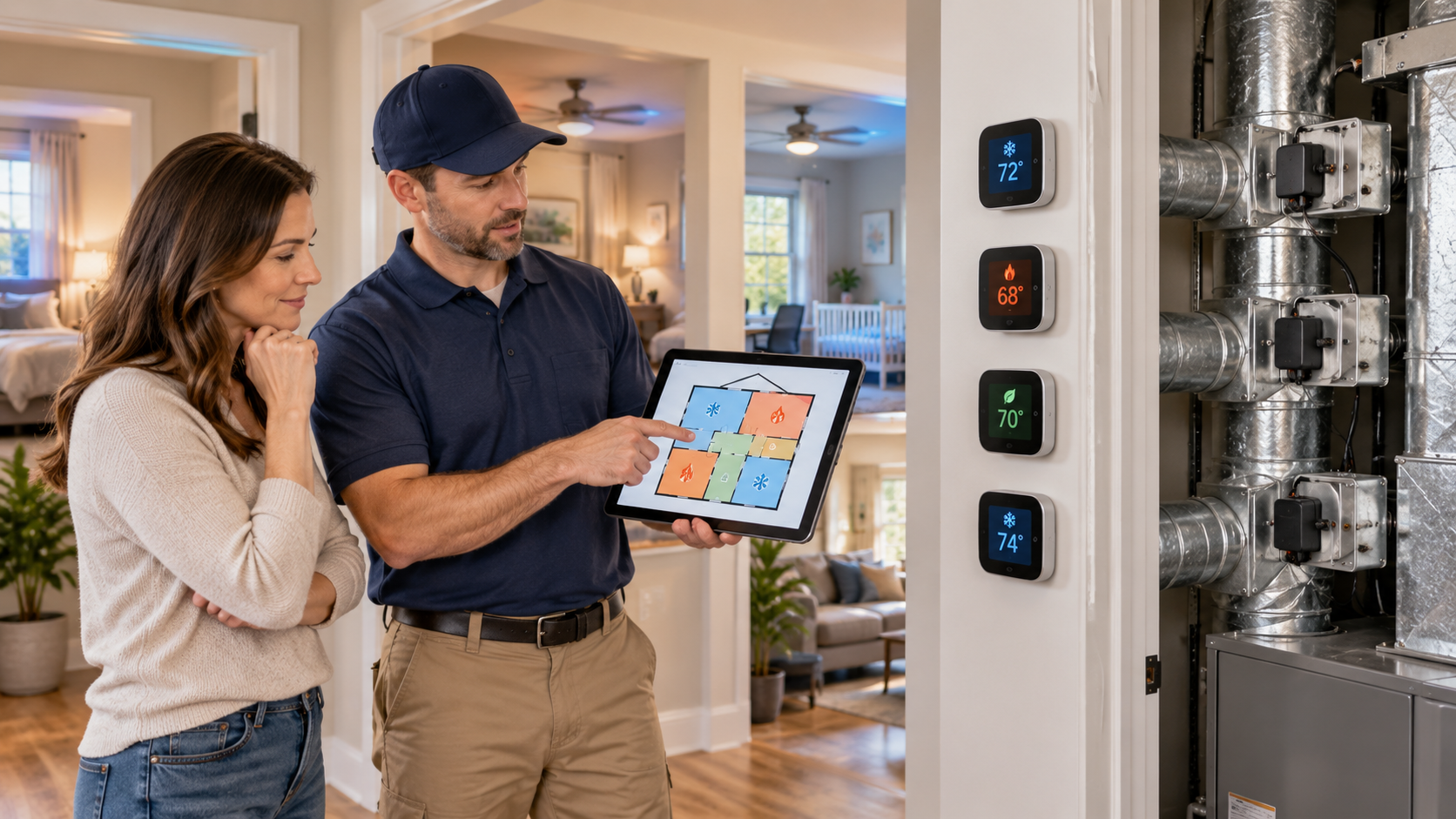
- Smart controls: Integrates with Wi-Fi thermostats and zoning systems for precise comfort.
Disadvantages
- Higher upfront cost: Installation and components are more expensive.
- Complex maintenance: Requires certified technicians for service.
- Potential inverter board repairs: Electronic parts can be costlier to replace.
Variable-speed units are perfect for hot climates, large homes, or energy-conscious homeowners who prioritize comfort and long-term efficiency.
Variable-Speed vs Single-Stage Heat Pumps: Efficiency Face-Off
Now, let’s break down the performance, cost, and comfort differences side-by-side.
| Feature | Variable-Speed Heat Pump | Single-Stage Heat Pump |
| Compressor Type | Inverter-driven, modulating | Fixed-speed, on/off |
| SEER2 / HSPF2 Rating | 20–24 SEER2 / 10–12 HSPF2 | 14–16 SEER2 / 8–9 HSPF2 |
| Energy Use | Adjusts to demand, highly efficient | Consumes full power when running |
| Comfort Control | Maintains stable temperature & humidity | Temperature swings common |
| Noise Level | 50–55 dB (very quiet) | 65–70 dB (louder) |
| Initial Cost | $7,000–$12,000 | $4,000–$6,000 |
| Maintenance | Advanced diagnostics, inverter tech | Basic, low-cost maintenance |
| Best For | Long-term efficiency, all-season comfort | Budget installs, mild climates |
According to ekotrope higher SEER2 and HSPF2 ratings directly correlate with greater seasonal efficiency and lower long-term operating costs.
Key Takeaway
Variable-speed heat pumps clearly outperform single-stage heat pumps systems in efficiency, comfort, and sound, but require a higher initial investment. Over time, energy savings and rebates can make up for the cost difference especially in areas with heavy HVAC usage.
The Real-World Efficiency and Cost Equation
The true efficiency advantage of variable-speed systems becomes clear when you look at part-load performance and how often they run at lower speeds.
- Single-stage units operate at 100% capacity, even if your home needs only 40% of the cooling power.
- Variable-speed units, on average, run at 50–70% capacity, maintaining comfort while using far less electricity.
Over a year, that difference can reduce energy bills by 30–40% depending on climate, insulation, and usage hours.
Payback Period Example
Let’s say a homeowner upgrades from a $6,000 single-stage system to a $10,000 variable-speed model.
If energy savings are around $400–$500 annually, the payback period would be 8–10 years shorter if local rebates or energy credits apply.
Comfort and Climate Suitability
Variable-Speed Units
- Best suited for hot or mixed climates (Texas, Florida, Arizona).
- Excellent humidity control for consistent indoor comfort.
- Great for larger homes needing zoned HVAC systems.
Single-Stage Units
- Practical for mild or coastal climates (Pacific Northwest).
- Ideal for rental properties or budget-limited homeowners.
- Easier and cheaper to install for smaller homes or seasonal use.
In regions with long cooling seasons, variable-speed systems not only improve comfort but also reduce wear and tear by running continuously at low speeds rather than cycling on and off.
Maintenance, Reliability, and Longevity
Variable-speed compressors are engineered with sophisticated inverter technology, which demands professional servicing and occasional firmware calibration.
However, leading brands like Trane, Carrier, and Lennox have refined this technology to ensure long-term reliability.
Single-stage systems remain popular because of their simplicity and proven durability, especially for homeowners who prefer low-maintenance HVAC setups.
If dependability is a key factor, it’s worth checking our HVAC Units Heat Pump guide for models known for reliability over raw efficiency.
Rebates, Incentives, and Long-Term ROI
With the Inflation Reduction Act (IRA) of 2025, homeowners can qualify for federal tax credits and state-level rebates for high-efficiency heat pumps, particularly variable-speed, Energy Star-certified models.
These incentives can offset up to $2,000–$3,000 of installation costs, significantly improving ROI.
If you’re curious how SEER ratings directly influence long-term savings and energy costs, check out our detailed guide on the Highest SEER Heat Pumps in 2025, it explains how top-rated models perform in real-world conditions and whether their premium price truly pays off over time.
Expert Verdict — Which Heat Pump Wins?
When comparing variable-speed vs single-stage heat pumps, the winner depends on your priorities:
- Choose Variable-Speed if you value energy efficiency, quiet operation, and year-round comfort. Ideal for homeowners who plan to stay long-term.
- Choose Single-Stage if you’re focused on upfront affordability, low maintenance, or if your HVAC use is moderate.
For most homeowners in 2025, the sweet spot lies in variable-speed or two-stage systems, offering a perfect blend of performance, comfort, and savings.
FAQs: Variable-Speed vs Single-Stage Heat Pumps
Q1. Are variable-speed heat pumps worth the extra cost?
Yes, they can reduce energy consumption by up to 40% compared to single-stage systems, offering long-term savings and improved comfort.
Q2. How much more efficient is a variable-speed heat pump?
On average, variable-speed models deliver 20–30% higher SEER2 ratings, resulting in lower electricity bills and smoother temperature control.
Q3. Which lasts longer: single-stage or variable-speed systems?
Both can last 12–15 years, but variable-speed systems require more professional maintenance to ensure longevity.
Q4. Can variable-speed heat pumps work in cold climates?
Yes. Modern inverter systems, like Mitsubishi Hyper-Heating and Carrier Infinity, maintain full heating capacity down to -13°F.
Q5. Are inverter-driven systems more expensive to repair?
They can be due to advanced electronics and control boards. However, the savings in energy bills often offset potential repair costs over time.
Final Thoughts
The efficiency face-off between variable-speed and single-stage heat pumps isn’t just about technology, it’s about priorities.
If you’re building for the future, where energy savings, sustainability, and comfort matter most, variable-speed systems are clearly the winner. But if simplicity and affordability are your main goals, a single-stage system still offers reliable, time-tested comfort.
As with all HVAC decisions, the best approach is balance and that means considering efficiency, climate, reliability, and long-term ROI together. Do you have questions, or are you ready to start your next project? Explore our services at Airco Mechanical!